Army to Detonate 5 Tons of Lead Chemicals in Iowa Friday
Officials advise residents in Middletown to evacuate or shelter in place as unstable munitions materials are destroyed.
By Marco Alvarez ·
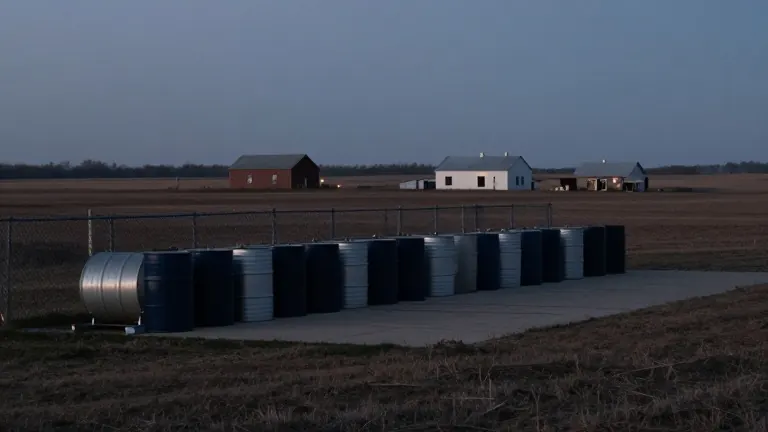
The U.S. Army will detonate approximately five tons of unstable bomb-making chemicals at the Iowa Army Ammunition Plant this Friday. The operation targets lead azide, a compound that has degraded during storage and poses a risk of accidental explosion if moved. Local officials are urging residents in the nearby community of Middletown to vacate the area if possible. Those who remain should stay indoors with windows and doors sealed.
A public advisory notes that the blasts will release an air plume containing lead particles. These particles will disperse and settle on the ground. Lead is toxic to humans and animals. Vibration from the two planned detonations may break old windows in the Middletown area. Officials expect the dust to linger for up to one hour, a duration dependent on wind speed.
Army modeling indicates that lead levels in the air may rise but should remain below the threshold requiring protective action by the U.S. Environmental Protection Agency. Maps showing potential drift are being updated based on current weather forecasts. The Iowa Department of Agriculture has advised residents to bring animals, hay bales, and water sources indoors to protect them from contamination.
Iowa U.S. Sen.-elect Josh Turek called for a delay in the detonation. He argued that the public needs a clearer understanding of potential health impacts before the operation proceeds. Schools in the region are responding to the uncertainty. Nearly 400 people live in Middletown, but thousands more in surrounding areas face potential exposure.
School Superintendent Pat Wallace in Danville decided to cancel classes for Friday. Wallace initially intended to keep schools open but cited uncertainty as the reason for the change. He stated that canceling was the most responsible decision given the unknown conditions. Wallace noted he was not suggesting the detonation would create unsafe conditions, but rather that officials did not know what the environment would look like on Friday afternoon.
In Mediapolis, located less than 20 miles away, schools and the public library will close on Friday. The local fire department plans to hose down playgrounds to wash away lead particles. The Army recommends that residents clean cars, windowsills, and outdoor surfaces. Some residents on social media have questioned whether these cleaning measures will be sufficient.
Residents of Middletown first learned of the disposal need in March. The ammunition plant had paused operations for a review, during which staff discovered the degraded material. Lt. Col. Daniel Nosse, commander of the plant, described the safety of neighbors as non-negotiable at that time. The Army provided more details at a public meeting in October. The EPA issued an emergency permit on November 13, allowing the detonation to proceed.
The permit required the Army to model how the material would disperse. This requirement triggered an advisory for communities up to 100 miles away. The Army assembled a panel of experts in munitions chemistry, engineering, and environmental safety to design the plan. Moving the barrels was deemed too risky because the volatility increases in cold weather, according to Justine Barati, a public affairs specialist at the Army Sustainment Command.
Experts note that the total amount of contamination in the air and on surfaces remains unknown. Patrick O’Shaughnessy, a professor at the University of Iowa, stated that lead is a neurological toxicant. Andrew Whelton, an environmental engineering professor at Purdue University, explained that high doses over a short period can cause lead poisoning. Long-term exposure to low doses can cause neurological development problems in young children.
Morgan Hoenig, a staff member at Iowa State’s Des Moines County Extension field office, said the office received many calls from concerned residents on Thursday. Residents expressed fear for their animals and vegetable gardens. Hoenig reported that the office ran out of soil test kits on Wednesday.