Center Street: A proposal to turn the Master Lock site into a regional indoor track hub
Planner Frank Schneiger argues the windowless structure is uniquely suited for a banked track that would serve local schools and attract winter athletic meets.
By Andrew Hayes ·
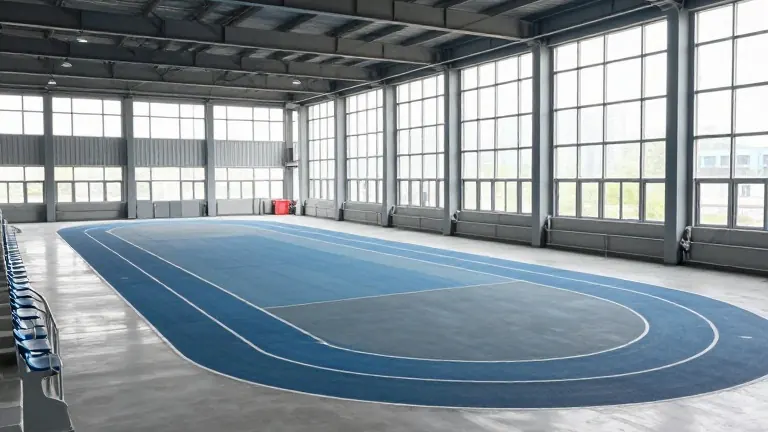
3,500 men slept on the floor of a Manhattan armory thirty years ago. The building then became the premier indoor track and field facility in the United States. Frank Schneiger, a management planning consultant, argues that a similar transformation is possible for the Master Lock facility on Center Street in Milwaukee.
Schneiger wrote an opinion piece on November 22 outlining his proposal. He states that the Master Lock site has a footprint, location, and parking availability that make it an ideal candidate for conversion. A key physical factor in his argument is the lack of windows. He notes that windowless buildings have limited commercial uses, with indoor sports being one of the primary options.
The proposal centers on creating a banked track. Schneiger points out that local universities, colleges, and schools currently face a competitive disadvantage. They lack a first-class indoor facility for training during the winter season. He adds that such tracks can be unbanked to accommodate athletes with disabilities.
The facility would also serve as a destination for major indoor meets. Schneiger suggests this would provide an economic boost during the winter months. He describes this period as the slowest part of the year for Milwaukee. He cites the Mitchell Park Domes project as a parallel example of successful execution and community impact.
Schneiger draws a direct comparison to the New York Armory Track and Field Center. He describes the original vision as converting a decrepit armory in a bad neighborhood into a sports center. He served in a role developing community programs there, including the Armory Prep program. That initiative has sent several thousand young people from low-income communities in Harlem, the South Bronx, and Washington Heights to college.
He believes the Master Lock site can anchor a similar community transformation. He argues that the area is currently viewed as a bad neighborhood. He proposes that co-locating existing Milwaukee programs that currently operate in isolation could build trust-based partnerships. He states these partnerships could focus on community change in ways that do not currently happen.
Schneiger identifies a specific need for leadership to move the project forward. He calls on Mayor Cavalier Johnson and Governor-elect David Crowley to act as champions for the idea. He describes the opportunity as one-time because of the unique combination of physical qualities and location. He asserts that the site has demonstrable need and benefits for the community.
The article presents a vision for the year 2032. It describes the Master Lock building as the nation’s preeminent indoor sports facility. It positions the site as a model for community change and economic development. Schneiger concludes by stating that the project is doable because it has been done before in New York.