Cuba's Power Grid Collapses as Oil Tankers Stop Coming
Only one tanker reached the island since January, leaving hospitals to run on hand-pumped oxygen and citizens to buy eggs for a month's salary.
By Aiko Sato ·
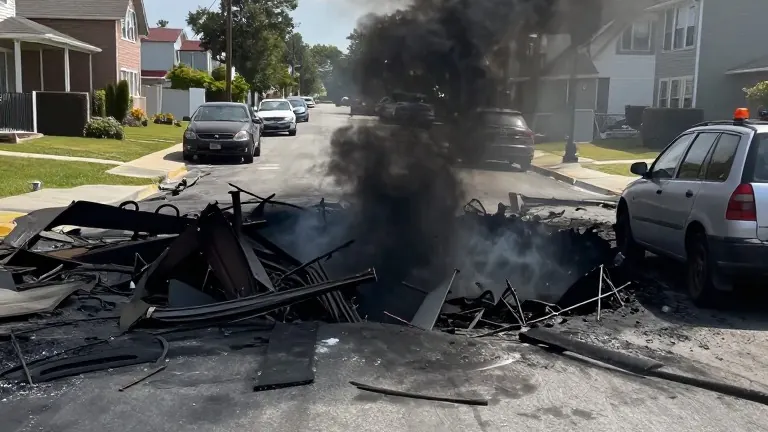
Since early January, only a single tanker of oil has reached the Cuban coast. That drop in fuel has crippled the electrical grid and plunged the island into daily blackouts. The U.S. Treasury Department says the restrictions are working. Havana calls them strangulation.
The crisis is visible in the streets of Old Havana. Lines for bread stretch around blocks. Pharmacy shelves sit empty. When the lights go out, the city disappears into darkness. The government employs most workers and runs the hospitals and schools, but it struggles to buy basic fuel, food, or medicine.
Washington blames the communist regime for decades of mismanagement. It says Havana hoards billions in overseas bank accounts. The Trump administration has threatened to sanction any country or company that does business with Cuba. Secretary of State Marco Rubio said the regime does not know what it is doing. He made regime change a priority of his career.
Havana rejects that view. Deputy Foreign Minister Carlos Fernández de Cossío told reporters that the U.S. has no legitimacy in its claims. He said the restrictions have become much tougher because they threaten punishment for commercial partners. He admitted the government bears responsibility for poor decisions, but he pointed to the external pressure from Washington.
The shortage hits hardest in hospitals. At the William Soler Hospital, staff treated a two-month-old infant who weighed less than five pounds. The baby was dehydrated and malnourished. He had no name and no family. Doctors said he was abandoned and brought in by protective services. Dr. Alejandro Chong, the head of the ICU, said the baby's prognosis was critical.
Chong said the team used formulas made from malanga, a starchy root vegetable, and chicken. They used these ingredients because specialized formulas from the United States are hard to get. When the electricity cut out, the staff relied on generators. When those failed, doctors finished surgeries using phone lights. If ventilators stopped, they pumped oxygen by hand.
Doctors told reporters that cancer drugs, anesthetics, and lab equipment are in critically short supply. Many have left the profession or the country. Dr. Chong owns a food stand where he makes more money than he does running the ICU. Dr. Lorien Rodríguez, a pediatric surgery resident, works as a radio host to support herself. She said there are fewer personnel and fewer resources.
One toddler waited 68 days for a part for an artificial lung machine. That part normally arrives in two days. Paloma Blanco, a dancer with the National Ballet of Cuba, is eight months pregnant. She is nervous about giving birth. She asked friends in the U.S. to send surgical supplies just in case she needs a C-section. She said many expecting mothers bring their own kits to the hospital.
The U.S. and Cuba stalled in negotiations earlier this year. Last week, tensions exploded at the United Nations. Cuban officials confronted U.S. Ambassador Mike Waltz. One Cuban diplomat was expelled from the U.S. after the incident. Waltz told the Cuban ambassador to back up, saying this was not Havana.
Cuba made its biggest economic reforms in more than six decades this year. It dropped monopolies on fuel, banking, and pharmacies. U.S. companies started exporting fuel to the private sector. The cost remains prohibitively high for most people. A carton of eggs can cost more than a month's salary. People now buy medicine on a thriving black market in street markets.