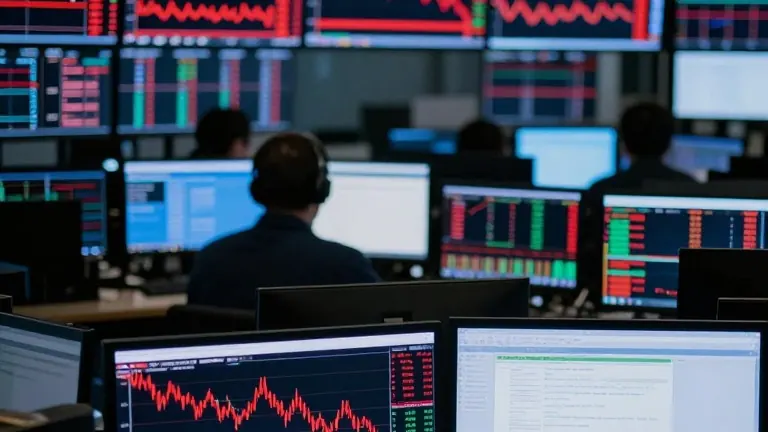
Dow Futures Jump 1,400 Points After Democrats Take Congress
Investors reacted to the election results with a sharp rally, betting that a divided government will limit legislative changes and stabilize economic policy.
By Marco Alvarez ·

Stock futures surged on Wednesday morning as investors priced in the shift of power in Washington. Democrats won control of both houses of Congress in Tuesday's midterm elections, ending the Republican majority. The market reaction was immediate, with the Dow Jones Industrial Average futures climbing 1,150 points before the open. By late morning, that gain had expanded to 1,416 points, a rise of more than 2 percent from Tuesday's close.
The primary driver of the optimism is the expectation of gridlock. Wall Street often prefers a divided government because it limits the ability of either party to pass major legislation. Daniel Alpert, executive chair at Westwood Capital, explained that the administration will struggle to push affirmative legislation during the final two years of President Trump's term. This stalemate creates a predictable environment that investors favor. S&P 500 futures rose 117 points, while Nasdaq composite futures gained 290 points by the same time.
Liz Ann Sonders, chief investment strategist at the Schwab Center for Financial Research, viewed the decisive result as a signal of stability. Speaking on the Schwab Network, she noted that voters prioritized affordability. She argued that if lawmakers succeed in reducing the cost of living, which voters equate with inflation, it will benefit the broader economy and equity markets. This view contrasts with the concern that new leadership might introduce disruptive policy changes.
Voter sentiment on specific issues provided additional context for the market moves. Democrats campaigned heavily on affordability, targeting high gas prices and inflation linked to the conflict with Iran. They also opposed the rapid expansion of data centers. Redbud Consulting data showed that voters supported measures restricting data center construction in 37 out of 44 instances. The restrictive position led in six additional cases, signaling a preference for regulation over unchecked growth.
This preference for regulation weighed on the technology sector. Shares of major tech firms, including Nvidia and Elon Musk's SpaceX, declined as of late Wednesday morning. Alpert observed that the AI industry benefited from a hands-off approach under the Trump administration. He warned that this dynamic was unlikely to continue under a Democratic Congress. He characterized the initial rally as a temporary pop, predicting that the market would test the reality of the new political setup.
Bond markets also adjusted to the political shift. Yields on 10-year and 30-year U.S. Treasury bonds fell by approximately four and three basis points, respectively, by late morning. These yields had risen earlier in the year due to increasing federal debt and higher oil prices driven by the Iran war. The recent decline in yields suggests investors are repricing the risk associated with government spending and inflation.
President Trump retains some influence during the lame-duck session before the new Congress convenes. Campaign promises included restricting the president's tariff authority and addressing healthcare costs. Alpert cautioned that Trump could still move markets in unpredictable ways. The president indicated he would review next steps in the war, which is now in its eighth month. Exit polling from NBC News suggested that roughly 60 percent of voters believed Trump made the wrong decision to take military action against Iran.
More Business · National news · Consumer Alerts · Report a business · Got a Story?