Strait of Hormuz oil traffic plunges 40 percent amid renewed tanker attacks
Iranian naval strikes and a reinstated US blockade have significantly reduced vessel traffic in the global oil chokepoint, triggering a sharp drop in monthly transit numbers.
By News Media House Staff ·
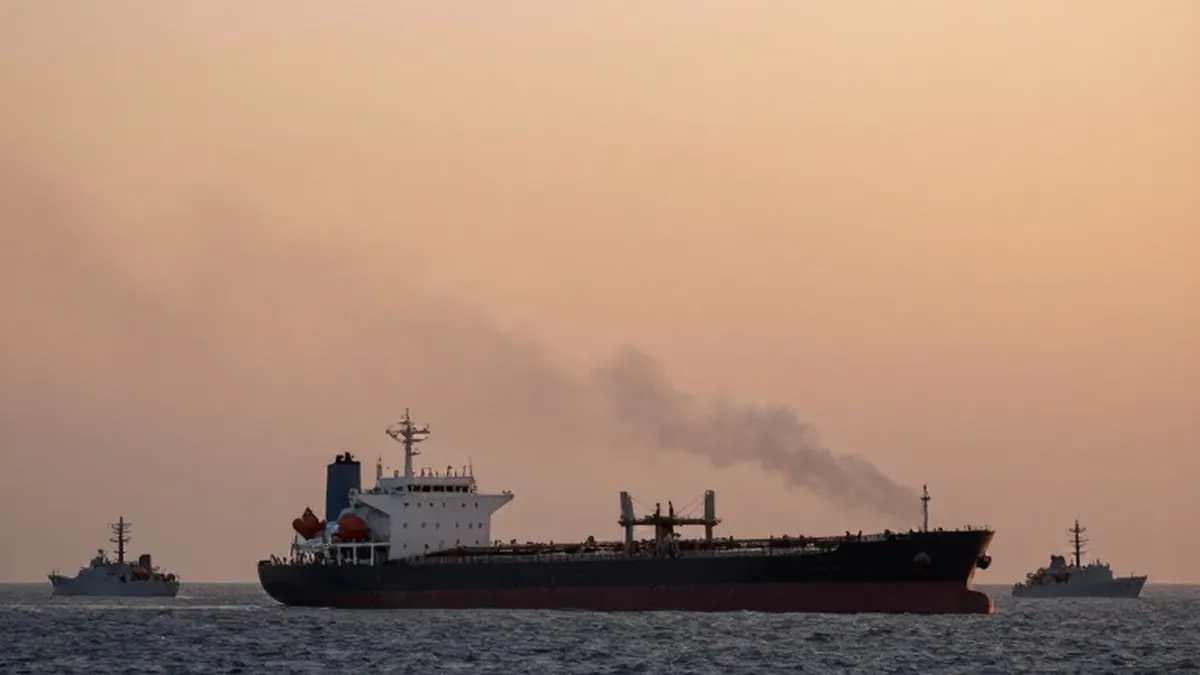
Iran has intensified its campaign against commercial shipping in the Strait of Hormuz, signaling a potential escalation in the ongoing conflict with the United States. Foreign Ministry spokesperson Esmaeil Baghaei stated on Monday that Tehran would definitely not tolerate the US naval blockade and would utilize all available tools to confront what he described as American aggression. He emphasized that Iran possesses the right to use any necessary means to defend itself against these measures.
The naval blockade, which was first imposed in April, had been lifted following a memorandum of understanding in June. However, the agreement collapsed weeks later, leading to the reinstatement of the blockade. This move has largely halted Iranian oil exports and is further squeezing the country's economy under the weight of US-led sanctions. Consequently, attacks on tankers attempting to cross the waterway have increased, contributing to a broader global energy crisis.
In the past week alone, more than 25 tankers have been hit, with many erupting in flames after striking naval mines reportedly placed by Iran. Despite the dangers, many vessels continue the journey without seeking Iranian approval. Reports indicate that these ships often travel at night and disable their navigation transponders to avoid detection by Iranian officials. This clandestine approach, however, has introduced new risks for the shipping industry.
On Tuesday morning, the Iranian navy announced that two oil tankers had hit mines and caught fire in the strait. A statement reported by Tasnim news agency noted that the vessels entered a restricted zone east of the strait after turning off their identification and navigation systems. The navy reiterated that the strait would remain closed until Iran’s objectives were met, including the cessation of hostilities, the lifting of the blockade, and the waiver of sanctions. Officials also urged tanker owners to coordinate with the armed forces to ensure safe passage.
Military leaders in Tehran have called for a stricter control over the waterway. Amir Hatami, the commander of the Iranian army, stated during a speech at the Command and Staff University that conditions must become more difficult for the enemy. He argued that Iran must tighten its management of the strait to assert its dominance. Similarly, Ali Ozmaei, head of the Islamic Revolutionary Guard Corps navy, warned ships against using unapproved routes, describing the strait as a place where maritime warnings should not be ignored.
Despite the heightened tension and physical attacks, oil prices have seen a decline. Brent crude futures are currently trading at $88.35 per barrel as supplies recover, a significant drop from a recent peak above $120 per barrel. According to the AIS ship-tracking platform, 28 ships crossed the strait in the last 24 hours, carrying an estimated 4.18 million barrels of oil. However, experts note that this count may be inaccurate because the platform only tracks vessels with active transponders, missing those using no-signal bypass routes.
The decline in traffic is evident when compared to pre-war figures, where 125 to 140 ships typically passed through the strait daily. In addition to targeting tankers, Iran has carried out attacks on US military bases in the Gulf, focusing on radar systems. US President Donald Trump noted on Truth Social that Iran had launched more drones and missiles in the previous week than at any point in over a year, although he claimed all were downed without causing damage.
The US Central Command issued an advisory last week stating that ships receiving cargo from vessels loaded at Iranian ports or along the coastline could be considered to be evading the blockade. This measure aimed to close loopholes that allowed some Iranian petroleum products to reach international markets. Iran has repeatedly warned against these efforts to hamper its trade, maintaining that the blockade is a form of economic pressure.
Data from Marine Traffic confirms the significant impact on oil traffic over the course of November. Between November 1 and 23, the number of vessels crossing the waterway has dropped steadily. In the first week of the month, 226 vessels entered or exited the Gulf. By the final week, from November 17 to 23, only 125 vessels crossed, representing a decrease of more than 40 percent.
The trend reached its lowest point on Sunday, when only one vessel exited the Gulf and two entered, marking the lowest figures for the month. In contrast, the highest daily traffic occurred at the beginning of November, with 29 vessels exiting on November 1 and the peak for entries occurring on November 7. These statistics illustrate the growing reluctance of shipping companies to navigate the contested waterway.
Originally published by News Media House