Kemp Declares State of Emergency in Four Georgia Counties After Toccoa River Breaches 1990 Record
Record rainfall caused the Toccoa River to rise 16 feet in 12 hours, displacing residents in McCaysville and neighboring Tennessee towns.
By Marco Alvarez ·
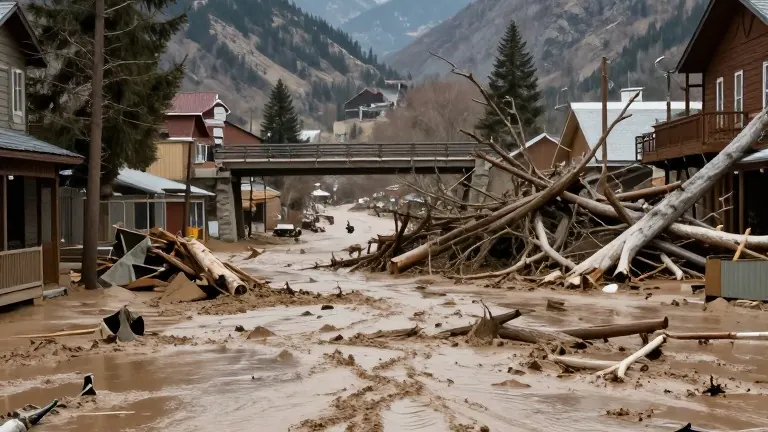
Georgia Governor Brian Kemp declared a state of emergency for Union, Fannin, Gilmer, and Murray counties following record flooding that struck early Thursday morning.
The declaration follows intense rainfall that swept through the mountains of northern Georgia and southeastern Tennessee between Wednesday night and early Thursday. The Toccoa River, which becomes the Ocoee River after crossing into Tennessee, surged out of its banks and spread hundreds of yards beyond its normal channel in some locations.
Meteorologist Alex Forbes reported that the river rose approximately 16 feet in 12 hours. Much of that increase occurred during a three-hour period. The river reached a reported record crest of about 18 feet, surpassing a high of 17.8 feet set in February 1990.
The rapid rise left residents with little time to escape. In Copperhill, Tennessee, a retired couple woke in the middle of the night to find their belongings floating through their living room. Sandra Edwards said the water rose above their deck before she and her husband, Tommy, grabbed their dog and escaped. She recalled jumping into the living room to see items floating in the water.
Emergency crews rescued dozens of people from flooded homes and trapped vehicles. U.S. Army Rangers from Camp Merrill in Lumpkin County, Georgia, assisted with rescue operations. A military helicopter flew over the flooded area with a Ranger positioned outside to search for anyone in need. McCaysville Police Chief Michael Earley said no major injuries had been reported as of Thursday afternoon, though some residents were taken to hospitals for hypothermia.
As floodwaters receded, debris became a primary concern. Massive logs, some estimated at 3.5 to 4 feet in diameter, piled against bridges in McCaysville. Propane tanks were spotted lodged beneath bridges and floating along the swollen Ocoee River and Fightingtown Creek. In Copperhill, floodwaters washed out a culvert near Fightingtown Creek, leaving a roadway covered in thick silt.
The flooding struck a region still recovering from a previous disaster in early August 2026. That earlier event damaged homes, businesses, and public buildings, including the police department and post office. Authorities have not released a final accounting of the number of people displaced or the total number of properties damaged. Street sweepers began removing mud and silt from roads in McCaysville by midday Thursday.