
Endurance swimmer crosses Strait of Hormuz to highlight war impact on marine life
Lewis Pugh completed a nine-mile swim in the conflict zone to draw global attention to the ecological damage caused by the ongoing war.
By News Media House Staff ·
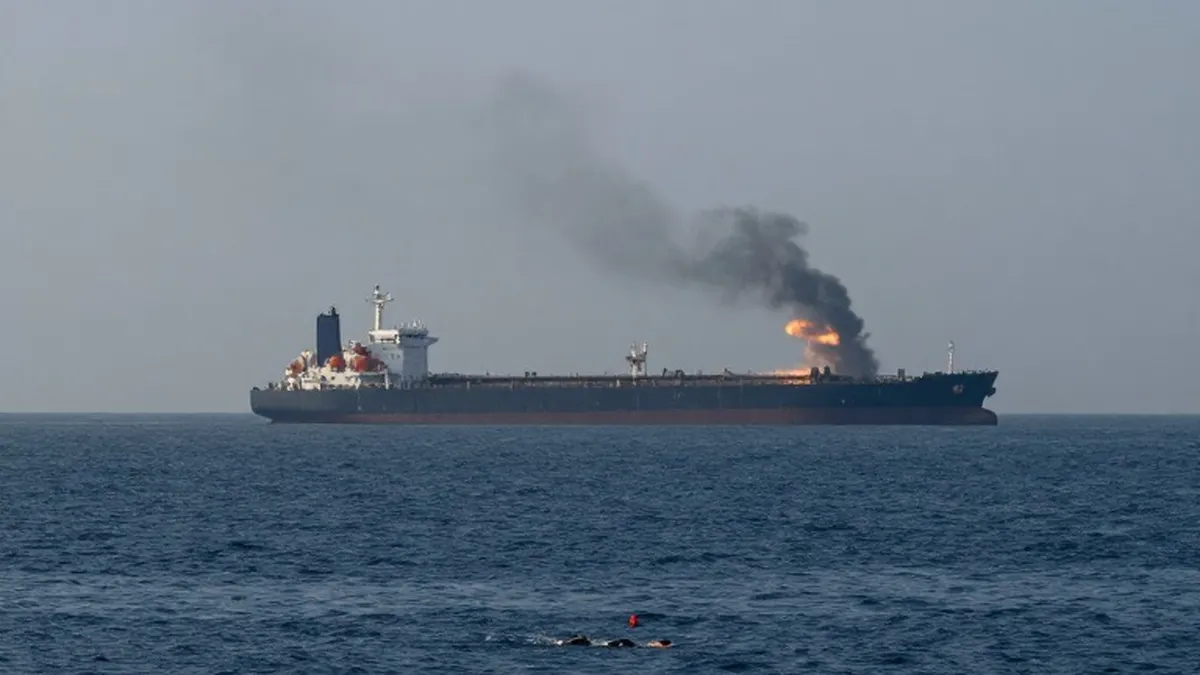
British endurance swimmer Lewis Pugh has long been known for tackling extreme environments, from the freezing waters of the North Pole to the icy seas of Antarctica. However, his latest undertaking in the Strait of Hormuz presented a unique set of challenges that even his extensive experience could not fully prepare him for. Rather than battling only the elements, Pugh had to navigate a dangerous waterway where tankers are frequently attacked and destroyed.
As a United Nations Patron of the Oceans, Pugh spent three days this week swimming portions of the strait to emphasize the threat the current conflict poses to the region's habitat and wildlife. He is believed to be the first individual to attempt a long-distance swim in this area since the war began. His journey covered approximately 9.3 miles, starting from the Musandam Peninsula at the southern tip of the strait and concluding after he rounded the Cape of Hormuz.
The conditions were far from calm. Pugh, who was wearing only swimming trunks, goggles, and a cap with the U.N. logo, reported hearing two loud explosions shortly after entering the water on Monday. He described seeing an oil tanker hit about four kilometers away, followed by the arrival of fighter jets. The intensity of the blasts and the proximity of the action made him realize the urgency of the situation, prompting him to seek exit quickly.
Despite the danger, Pugh managed to complete his feat over several days, with a total swimming time of about six and a half hours. The challenge was broken into sections to ensure safety. During the process, he witnessed another vessel being attacked, which sent fireballs into the sky. He noted that while many view the strait primarily as a critical shipping lane, it is also one of the most beautiful and biodiverse regions in the natural world.
Pugh warned that the sinking of numerous ships places the area under severe threat. He estimated that it would take years, or even decades, for the ecosystem to recover from the damage. Iran has increased attacks on vessels it claims are using unauthorized routes in recent weeks, seeking to assert control over the waterway. Before the conflict began on February 28, roughly one-fifth of all traded oil passed through this corridor.
The environmental consequences are significant. Several tankers have struck mines laid by Tehran, with some exploding and catching fire. One such vessel was carrying more than two million barrels of oil last month. Pugh highlighted that oil leaking from the dozens of damaged tankers since February could create lasting problems for local animals, coastlines, coral reefs, and mangrove forests. He described the difficulty of cleaning up such chemical pollution, noting that its effects can last for generations.
During his time in the region, Pugh observed large numbers of dolphins, turtles, and ospreys. He recalled seeing hundreds of turtles during a pre-war swim along the Omani coast. On the second day of his challenge, he returned to the harbor after witnessing a gas carrier being struck. He vividly remembered the smell of chemicals and the flames rising from the ship, with the surrounding water appearing to be on fire. He described the impact of such casualties on nature as very acute.
Pugh has spent the past 40 years using swimming to advocate for marine protection, having completed long-distance swims in every ocean and across the North Pole. His foundation reports that these challenges have helped secure agreements to protect over 1.35 million square miles of vulnerable ocean. Some observers have referred to his approach as Speedo diplomacy, a blend of athletic endurance and political outreach.
The swimmer believes that sport opens doors and creates dialogue, enabling people to consider important environmental issues. His message remains straightforward: the war needs to stop, the strait must be reopened, and the resulting pollution must be cleaned up to preserve the region's natural heritage.
Originally published by News Media House
More News · National news · Report a business · Got a Story?