
TimeLine Theatre stages Chicago premiere of 'Home, I'm Darling'
The production opens at the Evanston venue with a cast led by Claire Kaplan and Elliot Sagay in a period piece about a couple attempting to live in the 1950s.
By Matthew Brooks ·
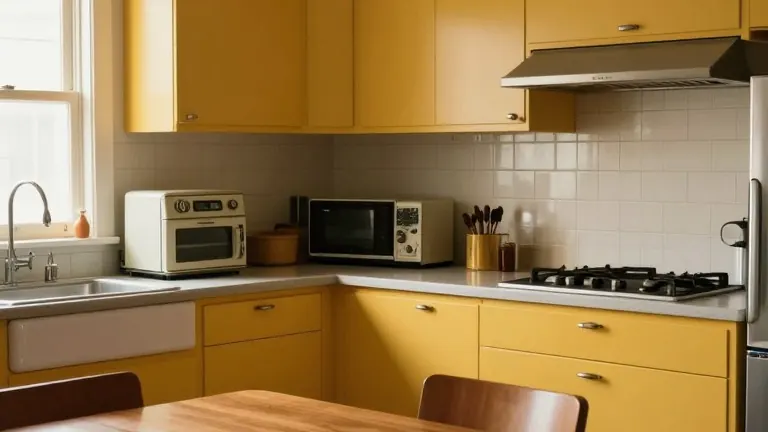
Chicago audiences will see the stage adaptation of "Home, I'm Darling" for the first time at TimeLine Theatre. The production brings British playwright Laura Wade's work to the American stage, marking its debut in the city. The play examines the complexities and potential failures of modern nostalgia through the lens of a domestic experiment.
The narrative centers on a couple who decide to live according to 1950s social norms in the 21st century. The play was originally written in 2018 and received the Olivier Award for Best New Comedy in London. This Chicago premiere features a full cast interpreting Wade's dialogue, which relies heavily on rhythm and pause to convey meaning.
Claire Kaplan portrays Judy, a former finance worker who initiates the lifestyle change after losing her job. Elliot Sagay plays her husband, Johnny, who agrees to the arrangement. In the opening scene, Judy prepares breakfast with homemade marmalade, and the pair discuss their contentment. Judy describes their state as "appallingly happy," a phrase Johnny uses to describe their bliss.
The performance highlights the tension between the idealized past and modern economic reality. Judy uses a laptop to source vintage items for their home, a necessary exception to their strict aesthetic. Janet Ulrich Brooks plays Sylvia, Judy's mother, who disapproves of the project. Sylvia argues that women worked to move beyond the era Judy is trying to recreate.
Gloria Imseih Petrelli appears as Alex, Johnny's boss, a character whose gender surprises the protagonist. Maya Rowe and Brandon Dahlquist play Fran and Marcus, another couple considering a similar lifestyle shift. Their storyline explores how 1950s social dynamics benefited men, particularly regarding employment laws and domestic expectations. The scenes featuring these characters examine the specific advantages that historical gender roles offered to white men.
Director Mechelle Moe leads the production, which transitions between comedy of manners, dramatic debate, and therapeutic probing. The tonal shifts create a varied viewing experience that moves from stylized humor to serious psychological inquiry. The script allows for moments of cringe comedy alongside deeper explorations of the characters' motivations.
Courtney O'Neill designed the set to reflect mid-century aesthetics, featuring a sun-colored kitchen and specific upholstery textures. Christine Pascual designed the costumes, which play a central role in the visual presentation. Kaplan changes outfits onstage between scenes, a choice that emphasizes the performative nature of the characters' lives.
The production acknowledges the differences between British and American interpretations of the 1950s. Post-war conditions in Europe differed from those in the United States, and English social manners carried a specific weight. The cast delivers strong accents, though the timing of the dialogue requires precise execution to maximize its effect.
The play investigates why Judy desires to enclose herself in a retro-fantasy world. It questions the validity of returning to an era perceived as simpler, when appliances lasted longer and social interactions were less mediated by technology. The work remains unresolved regarding the full reasons for Judy's longing, leaving the psychological dimension of her desire open to interpretation.
More Culture · Chicago news · Report a business · Got a Story?