Cook County tops Illinois in deer-vehicle crashes, IDOT data shows
Mid-November marks the peak season for wildlife collisions as mating season ends and daylight shrinks.
By Matthew Brooks ·
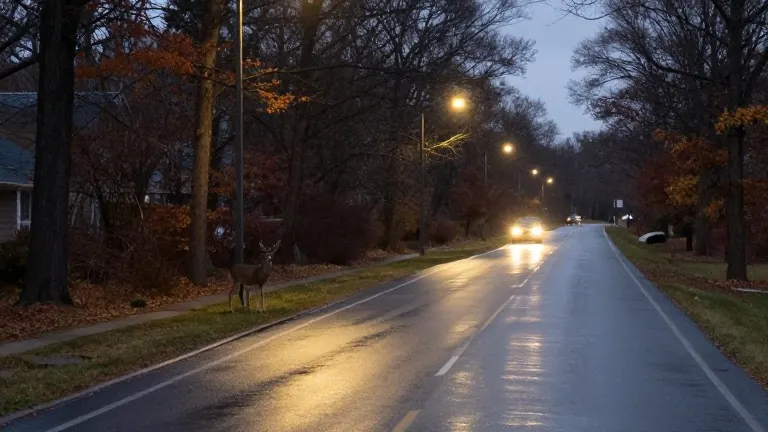
Drivers in Cook County face the highest number of deer-vehicle collisions in Illinois, according to data from the Illinois Department of Transportation. The county recorded 559 such incidents last year, surpassing McHenry County with 391 and Kane County with 372. Statewide, 14,529 deer-vehicle collisions occurred last year, resulting in seven deaths and 677 injuries.
A 2025 study by researchers at the University of Illinois identifies mid-November as the most dangerous period for these crashes. The study notes that the end of peak mating season overlaps with declining daylight hours, creating conditions that increase the risk of accidents. This timing places suburban and urban drivers in Cook County at elevated risk during the next few weeks.
Maria Castaneda, a spokesperson for the Illinois Department of Transportation, explained that Cook County's high collision count is partly due to its extensive green spaces. Despite its urban character, the county contains more than 70,000 acres of forest preserves. Castaneda stated that deer are highly adaptable and thrive in rural, suburban, and urban areas with sufficient forest cover.
Molly Hart, a spokesperson for the AAA Auto Club Group, urged drivers to remain extra vigilant during dawn and dusk, when deer are most active. She noted that deer are currently breeding and moving through roadways. Hart advised drivers to slow down, scan the roadside, and maintain focus to reduce the chance of a serious crash. She emphasized that drivers often have only seconds to react when a deer enters the lane.
Hart specifically warned against the instinct to swerve when encountering a deer. She said swerving can lead to severe collisions with trees, poles, or guardrails. Instead, drivers should brake firmly and stay in their lane. Castaneda echoed this advice, citing the unpredictability of deer in headlights as a reason to proceed slowly.
David Gorchov, a biology professor at Miami University in Ohio, attributed the growing deer population in the Midwest to a lack of natural predators and an abundance of food. He pointed to the declining numbers of wolves and mountain lions as key factors. The Forest Preserves of Cook County initiated a deer management program in the 1980s to address concerns that the growing population was depleting native vegetation and harming local ecosystems.
Castaneda provided guidance for drivers who collide with a deer. She recommended pulling over when safe, calling the police, and remaining inside the vehicle until authorities arrive. She explained that injured animals can behave unpredictably, and staying in the car protects drivers from other traffic on the road.