Federal court delays Army plan to blow up lead azide barrels in Iowa
An 8th Circuit ruling halts the detonation of unstable munitions chemicals, forcing the military to wait for a decision before Monday.
By Leila Mansour ·
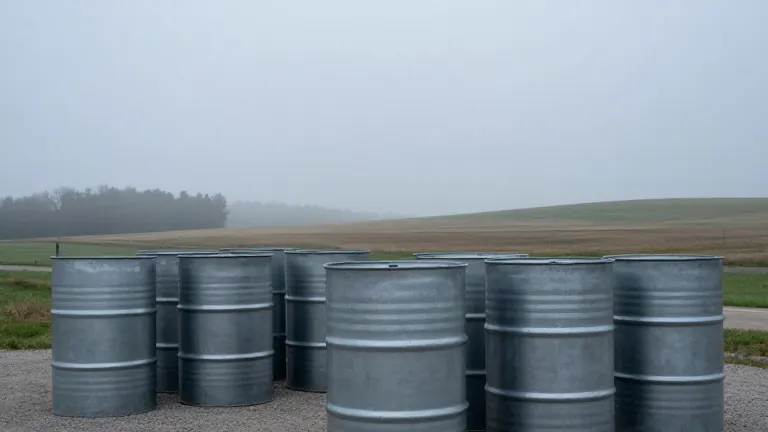
A federal appeals court issued a stay on Thursday that pauses the U.S. Army’s permit to detonate unstable chemicals in Iowa. The ruling prevents the military from proceeding with the planned explosion of lead azide barrels while the court reviews the case.
The 8th U.S. Circuit Court of Appeals granted the request from environmental groups to hold the emergency permit. The permit was originally approved earlier this month by the U.S. Environmental Protection Agency. The court has not yet set a schedule for a final decision or a hearing. Attorneys involved in the case expect the court to rule before Monday's scheduled operation.
Thien Chau, an attorney with Earthjustice, filed the petition on behalf of Iowa groups. He stated that the Army cannot detonate the materials under the current permit because it is stayed. Chau described the legal standard for overturning the stay as very high. He noted that the Army must show there is no other possible safe alternative for treating the material.
The Army initially planned to detonate the barrels on Friday. The military announced on Thursday that it would push the operation to Monday due to public concern. Acting Army Secretary Adam Telle said the delay moves the detonation to the latest possible moment before a forecast temperature drop. He warned that colder temperatures risk further destabilization of the material.
The need for detonation arose after staff at the Iowa Army Ammunition Plant found several dozen barrels of degraded lead azide in March. The material is used in munitions production and had begun to crystallize. This process created an unstable condition. The Army brought in experts in chemistry, engineering, and environmental safety to develop a treatment plan. EPA documents state that other methods, such as neutralizing the drums with chemicals, were considered but rejected due to the risk of an accidental detonation during handling.
Environmental groups argue that other alternatives were not fully considered. They also criticized officials for not sharing enough information with the public. The Army held a public meeting in Middletown in October. However, a public advisory released on Sunday was the first time communities up to 100 miles away learned of the potential impact. Nearly 400 people live in Middletown, which is 160 miles southeast of Des Moines.
Gov. Kim Reynolds activated the state emergency operations center on Friday afternoon. State agencies are coordinating with federal officials to monitor the situation. The Army, EPA, and Department of Health and Human Services issued a joint statement saying they are prepared to take extreme mitigation measures. Residents in the path of the predicted air plume were told to stay indoors and keep pets inside. Lucy Giehl, who lives four miles north of the plant, said she was unsure if she needed to wear gloves to clean surfaces or prevent her dogs from drinking pond water. She noted that many details had not been addressed with the public.