Evers Commutes 14 Wisconsin Sentences Before Leaving Office
The outgoing governor granted sentence reductions to 10 homicide offenders, ending a decades-long state streak without executive clemency.
By Aiko Sato ·
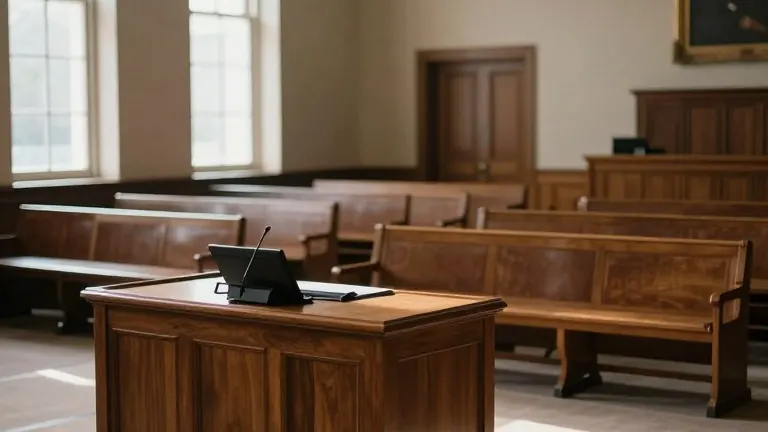
Wisconsin Governor Tony Evers issued 14 commutations on Friday, Nov. 13, ending a period of decades without executive clemency in the state. The last governor to grant such reductions was Tommy Thompson. With more than 50 days remaining in his term, Evers acted on the final batch of applications from a process he revived earlier this year.
The group includes 10 prisoners convicted of homicide. Five others were convicted of robbery or burglary. One prisoner was convicted of drug offenses, and one was convicted of arson. One individual received an immediate release. The other 13 received reductions in prison time, supervision periods, or earlier eligibility for parole.
Evers established the commutation process via an executive order in April 2026. Applicants filed petitions and then testified before a commutation advisory board. The board held public sessions where prisoners answered questions. Victims and family members also provided testimony. The board considered factors including the impact on victims, public safety, and the prisoner's behavior and growth in prison. The board issued recommendations to the governor, who retained final decision-making authority.
The most publicized case involved Michael Maldonado, who was 15 when convicted in 1995 of first-degree intentional homicide. He was originally sentenced to life in prison with parole eligibility in 2044. Under the new order, he will serve a maximum of four more years before becoming eligible for parole. Maldonado testified in August that he bought the gun used in the crime. He spoke to the board about the emotional suffering of the victim's family.
Other notable commutations include that of Wazir El-Amin, known as Wade Curtis. He was convicted of first-degree intentional homicide with a dangerous weapon. His original sentence was life in prison with parole eligibility in 2028. He is now eligible for parole immediately. DeQuelvin Douglas, convicted of first-degree intentional homicide and attempted first-degree intentional homicide, had a parole eligibility date of 2056. He is now eligible for parole in 2029.
The governor's office stated that district attorney offices supported the commutations for three of the 14 prisoners. Some victims or their families supported the actions for five prisoners. Correctional officers backed the commutations for five others. Republican State Senator Van Wanggaard criticized the moves. He called the actions "absurd" and "king-like." He argued that the governor overruled elected judges and district attorneys who had prosecuted the cases.
The Wisconsin Constitution grants the governor the power to issue pardons and commutations. A pardon is typically issued after a person has completed their sentence and supervision. A commutation reduces a sentence that is currently being served. Evers' office noted that he issued 2,443 pardons during his tenure, a record for the state.