
Israel's opposition targets speaker's chair
A fractured Knesset may allow Netanyahu's rivals to control the legislative agenda even if they fail to form a government.
By Marco Alvarez ·
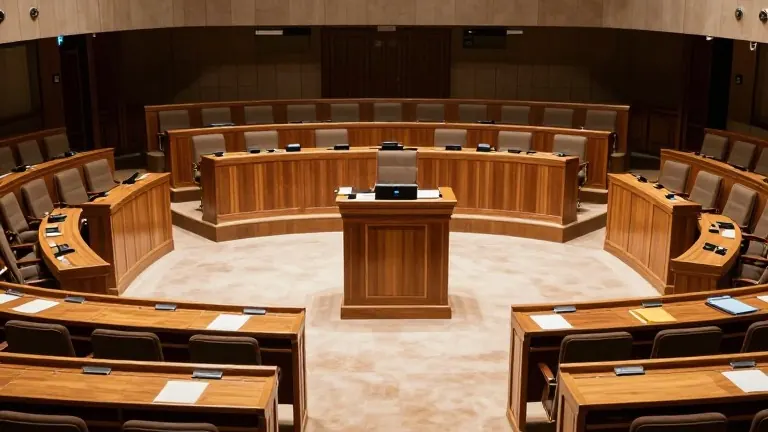
Prime Minister Benjamin Netanyahu may retain his cabinet while losing control of the Knesset agenda. A post-election logjam could create an unusually independent legislature that operates with limited coordination from the executive branch. This shift mirrors the dynamic anticipated in the United States, where recent polling indicates Democrats are positioned to win the House and potentially the Senate in Tuesday's midterms.
In the American system, divided government between the presidency and Congress is a common outcome. Israel’s political structure typically avoids this scenario because coalition discipline usually keeps the government and parliament aligned. The government normally commands a parliamentary majority that advances its legislative goals. The current deadlock threatens that standard operating procedure.
One concrete move is taking shape among the opposition parties. They are aiming to replace Likud Speaker Amir Ohana. The change bloc holds 48 seats, and Arab parties hold 19. Together, these numbers are sufficient to elect a new speaker if the factions agree on a candidate and cooperate.
Securing the speaker’s chair would give Netanyahu’s opponents greater control over the parliamentary schedule. This position would help them advance specific measures. These include establishing a state commission of inquiry into the events of October 7. It would also support efforts to legislate conscription for haredi men and roll back judicial-overhaul legislation passed by the previous Knesset.
These legislative efforts could begin while coalition negotiations continue. The outgoing government would remain in office during this period. This means the opposition could exercise legislative power before securing control of the government. However, electing a speaker is only the initial step.
Passing laws requires functional committees and agreement on specific language. A state commission of inquiry requires a defined legal route. The choice of who receives the first mandate to form a government from President Isaac Herzog is critical. That candidate’s party chairs the Arrangements Committee, which organizes the Knesset’s work and sets up committees.
If Gadi Eisenkot receives the mandate and his allies elect a new speaker, they are well positioned to act. If Netanyahu receives it, Likud retains a procedural foothold to complicate efforts. Chairing the Arrangements Committee does not guarantee Likud a majority on that body. The new Knesset is sworn in on November 10. It can begin work without waiting for a new government, though legislative progress requires active committees.
A major political challenge remains for the opposition. Bennett and Liberman have ruled out relying on Arab parties to form a government. It is unclear if they will use those same parties to pass major legislation. Netanyahu may portray such cooperation as a breach of promises. If the four-month process to form a government fails, another election follows within three months. The current Knesset retains legislative powers until the next one convenes.