Shenzhen Prepares for APEC Summit Amid Autonomous Vehicle Rollout
China’s tech hub restricts drone deliveries and robotaxi routes this week as world leaders arrive for the forum.
By Leila Mansour ·
Shenzhen has paused drone deliveries and scaled back robotaxi services in preparation for the Asia-Pacific Economic Cooperation summit scheduled for Wednesday and Thursday. The Chinese city, a major hub for technology development, will host President Xi Jinping and leaders from 21 member economies, including U.S. President Donald Trump and Russian President Vladimir Putin.
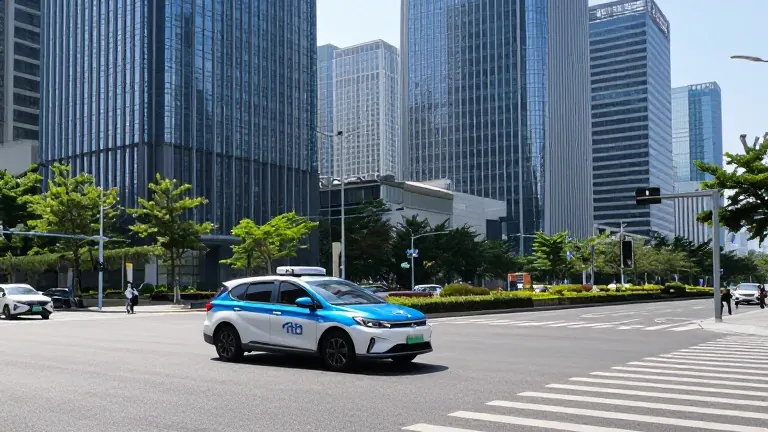
The restrictions apply to autonomous transportation services operating in the city. Pony.ai, a company that launched in 2016, operates a fleet of nearly 2,000 blue and white sport utility vehicles in Shenzhen. These vehicles also run in Beijing, Shanghai, and Guangzhou. The cars feature a small robot character named Popo on their sides.
Passengers can board these robotaxis only at designated pickup points within approved service areas. One such location is situated outside the headquarters of Tencent, the company behind the WeChat messaging application. A group of three Associated Press reporters recently completed a 7.6-kilometer trip to a hotel from this location.
The vehicle, an Arcfox model, completed the journey in 24 minutes. A screen inside the car displayed safety instructions and prompted passengers to fasten their seatbelts. The car slowed at intersections and stopped for pedestrians and red lights. The trip cost 12.7 yuan, or $1.90, which was lower than the standard taxi fare due to a first-ride discount.
Cong Lin, Pony.ai’s director of public affairs, stated that the vehicles use 34 sensors to perceive their surroundings in 360 degrees. The sensors can detect objects up to 615 meters away. In February, the robotaxis averaged between 23 and 25 trips per day per vehicle. Lin said the company views robotaxis as an additional option for users rather than a replacement for regular cars or taxis.
Gary Ng, a senior Asia-Pacific economist at the French bank Natixis, noted that Shenzhen’s transformation from a fishing village to a tech center began in 1980. That year, leader Deng Xiaoping designated the area as one of China’s first special economic zones, allowing private enterprise and foreign investment. The city now has a population of more than 18 million people.
Shenzhen is home to several major technology firms, including Huawei, BYD, and Tencent. The city’s proximity to Hong Kong helps attract capital and provides access to global markets. Ng said flexible government policies have allowed the city to experiment with new business models differently than other parts of China.
Local robotics company Pudu, founded in Shenzhen in 2016, manufactures service robots for restaurants and warehouses. Guo Cong, Pudu’s chief technology officer and co-founder, said the city’s supply chain allows parts to arrive within half a day. He noted that engineers can visit nearby clients within one or two hours. Guo described Shenzhen as a pioneer in displaying China’s strategy of efficiency and innovation to the world.