Thanksgiving menu relies on paper bags and 1789 gratitude
Mona Charen details her family's roasting method and traces the holiday's origins to Washington and Lincoln.
By Marco Alvarez ·
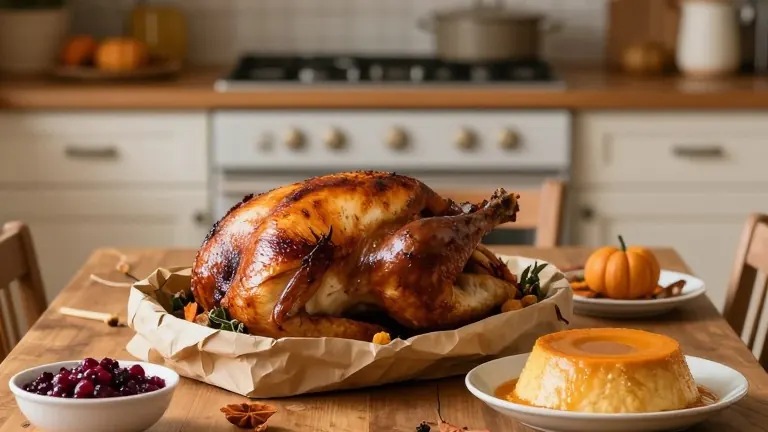
Mona Charen, policy editor at The Bulwark, spends 364 days a year monitoring her food intake to stay trim. That discipline pauses on the fourth Thursday of November. On that day, her family eats a large meal featuring a turkey roasted in a paper bag. The method involves rubbing the bird inside and out with vegetable oil, garlic, salt, pepper, and paprika. The seasoned turkey goes into a supermarket paper bag, which is then sealed with a stapler.
Charen notes that some cooking websites advise against this technique. Her family has used it for decades, and the bag keeps the breast meat moist while allowing the skin to turn golden brown. The bird spends four or more hours in the oven. The tang of a fresh cranberry sauce balances the heavy meat. That sauce is made by blending fresh berries, a whole orange with the rind, half a cup of sugar, and cinnamon in a food processor.
The table includes sweet potatoes with a citrus glaze, fresh vegetables, stuffing, and Champagne. Two desserts appear on the menu. One is a pumpkin flan with maple caramel based on a recipe from Ina Garten. Charen describes the flan as one of the best things she has ever tasted. The meal serves as an expression of gratitude, a theme that stretches back to the nation's founding.
In 1789, George Washington proclaimed a day of Thanksgiving. He thanked God for the care of the people before they became a nation and for the mercy shown during the late war. He also cited the tranquility and plenty the country had enjoyed since establishing constitutions of government. Washington described the manner in which the people established those constitutions as peaceable and rational. He wrote that the nation united in rendering sincere and humble thanks for these blessings.
Later presidents followed this tradition with their own proclamations. John Adams and James Madison issued Thanksgiving declarations. Thomas Jefferson did not. He believed asking people to pray breached the separation of church and state. The holiday's current date was fixed by Abraham Lincoln. In 1863, relieved after the Battle of Gettysburg, Lincoln decreed that Thanksgiving would be celebrated on the fourth Thursday of November.
Lincoln wrote an invitation to his fellow citizens to set apart that day for gratitude. He recommended that they offer ascriptions to God while also expressing penitence for national perverseness. He asked that they commend widows, orphans, and mourners to God's care. He implored the Almighty to heal the wounds of the nation and restore peace, harmony, and Union. The text was long and formal, but it was not entirely Lincoln's own work.
Secretary of State William Seward ghostwrote the proclamation. Seward had originally thought he would have been a better president than Lincoln. He later became one of Lincoln's most loyal subordinates. The holiday's timing has shifted before. In 1939, Franklin Roosevelt moved Thanksgiving to the third Thursday in November. He wanted to lengthen the holiday shopping season. The new date was widely mocked as Franksgiving. Congress scrapped the change by 1941.
Religious belief is not required to observe the day. Charen argues that gratitude can focus on the richness of life and the fortunate accidents that led to the present moment. She cites the support of family and loved ones, the pleasure of eating and drinking, and the genius of ancestors. Those ancestors built a better future through political wisdom, technical skill, and courage. Their work set the table for the current celebration. The holiday remains a time to recognize that bounty with full hearts.
More Culture · Chicago news · Report a business · Got a Story?