Transit agencies face vote on bus plans
Critics argue proposed 2027-2031 spending includes fossil-fuel vehicles that conflict with state zero-emission mandates.
By Matthew Brooks ·
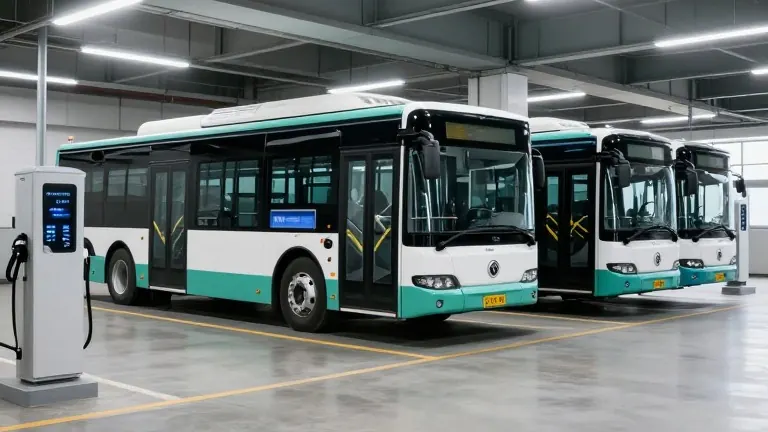
The Northern Illinois Transit Authority board meets on Dec. 10 to vote on a five-year capital program for 2027 through 2031. The plan outlines major purchases for the Chicago Transit Authority and Pace, two of the region's largest public transit operators. A coalition of transit advocates says the proposal conflicts with current Illinois law regarding zero-emission vehicles.
Illinois law enacted in 2023 bans new contracts for fossil-fuel buses starting in mid-2026. The statute specifically prohibits the authority from buying non-zero-emission buses for service board fleets. The law was created to support a goal of 100% zero-emission bus fleets by 2040. However, the current capital plan includes funding for diesel and hybrid buses that would remain in service well after that date.
The CTA proposal seeks approval for 150 diesel-electric hybrid buses starting in 2027. It also includes funding for 40 battery-electric buses. Additionally, the CTA lists $297 million for other bus purchases without specifying the vehicle type or quantity. Critics note that diesel hybrids reduce greenhouse-gas emissions by only 10% to 20% compared to conventional diesel models.
Pace's portion of the plan allocates $150 million for 99 battery-electric buses. It also reserves roughly $68 million for additional fossil-fuel vehicles, including compressed natural gas and hybrid models. The plan does not disclose the exact number of these non-electric vehicles. The combined spending represents tens of millions of dollars for buses that burn fossil fuels.
Bruce W. Mainzer, a former mass transit executive and former co-chair of the Chicago chapter of the Climate Reality Project, led the effort to draft the 2023 legislation. He states that transit buses operate for about 14 years, meaning any fossil-fuel bus ordered now will still be emitting exhaust in 2040. Mainzer estimates that a fully electric fleet for CTA and Pace would save the region more than $110 million annually in operating costs.
Mainzer points to federal funding data from 2022 to question the CTA's pace of transition. That year, the federal government distributed $1.6 billion for zero-emission buses and garages. Transit agencies in New York, Boston, and Los Angeles each received more than $100 million. The CTA requested only $29 million for 10 electric buses and a minor garage upgrade because it had not completed the necessary engineering work for larger grants.
The delay has affected garage electrification schedules. The CTA's 2022 plan promised electric buses at the 103rd Street Garage by 2024 and the 77th Street Garage by 2027. The agency is now requesting $133 million to retrofit the 103rd Street Garage, a project that is three years behind schedule. The current capital plan omits dedicated electrification funding for the 77th Street, 74th Street, and planned West Side or South Side garages.
Mainzer urges the NITA board to send the capital plan back for revision. He wants the board to remove all fossil-fuel bus purchases to comply with state law and to publish transparent procurement schedules. He also calls for a funded timeline to electrify CTA and Pace garages. The board must ensure the capital plan aligns with the legal mandate for a zero-emission fleet by 2040.