US Army to proceed with lead explosive detonations in Iowa after legal victory
The US Army will blow up a stockpile of toxic lead explosives in Iowa following a federal appeals court ruling that lifted a temporary stay on the operation.
By News Media House Staff ·
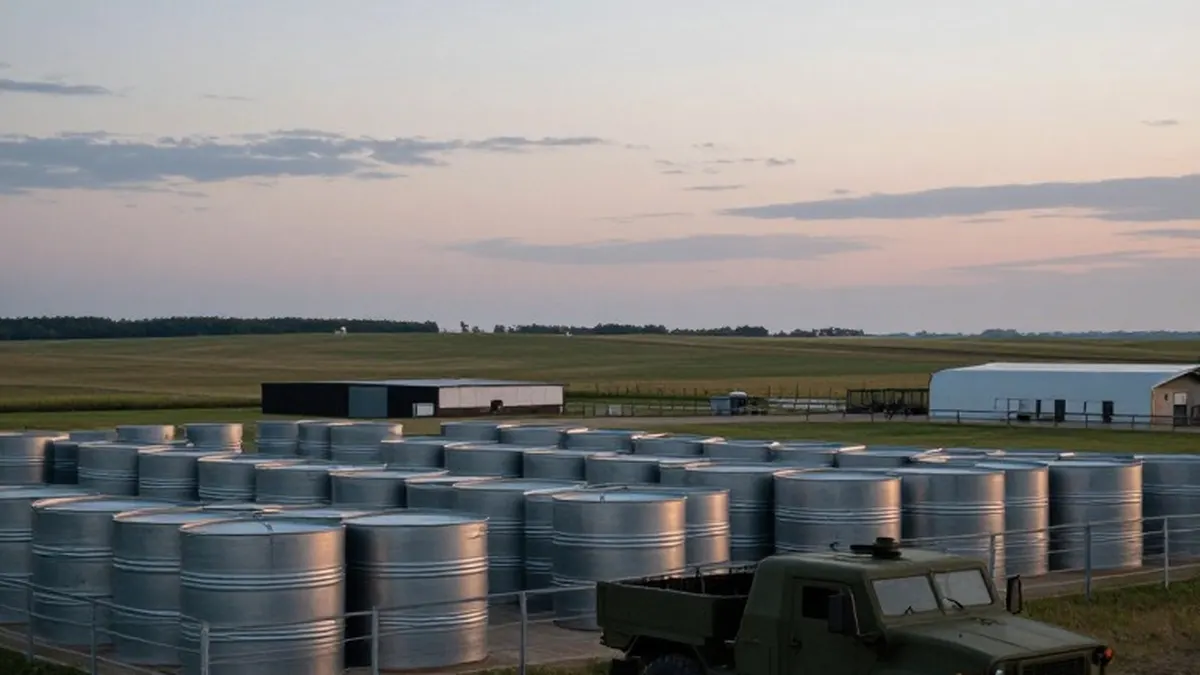
The United States military has confirmed it will move forward with the planned detonation of a deteriorating stockpile of toxic lead explosives in rural Iowa. This decision follows a recent ruling by a federal appeals court that granted clearance for the waste disposal operation. The announcement was made by Acting Army Secretary Adam Telle, who described the move as a consensus decision among federal agencies, the courts, and state officials.
In a statement posted on social media late on Monday, Telle emphasized that all expert agencies agreed on the necessity of the action. He noted that both the current and incoming governors of Iowa supported the decision to defer to technical experts. Telle stated that the controlled removal would proceed in full coordination with state, local, and federal authorities.
The controversy began last week when details emerged regarding the Army’s plan to conduct two controlled detonations. The operation involves 68 drums containing nearly 4,500 kilograms of degraded lead azide, a chemical compound used in munitions. The stockpile is located at the Iowa Army Ammunition Plant in Middletown, Iowa, which is situated approximately 240 kilometers southeast of Des Moines.
Environmental groups quickly filed a lawsuit to block the plan, citing public safety concerns. They argued that the explosions could release a plume of toxic lead dust affecting homes, crops, and livestock in areas far beyond the immediate detonation site. The lawsuit specifically challenged a special permit issued by the Environmental Protection Agency for the operation.
The EPA defended the plan by arguing that a managed detonation posed significantly less risk than an uncontrolled spontaneous explosion. The agency warned that the likelihood of such a spontaneous event was increasing as weather conditions in Iowa grew colder. Furthermore, the EPA stated that alternative methods, such as chemically neutralizing or relocating the storage drums, also carried a risk of triggering an uncontrolled blast.
The legal battle saw several twists in the days leading up to the final decision. A three-judge panel of the 8th US Circuit Court of Appeals initially issued a temporary stay on Thursday to block the EPA’s permit while the court conducted a more thorough review of the case. However, lawyers for the Trump administration filed a legal notice two days later, asserting that the Army intended to carry out the detonation with or without court approval. They cited an emergency exemption under federal environmental laws to support this position.
On Monday, President Donald Trump intervened in the dispute, ordering the Army to hold off on its disposal plan until the appeals court had ruled in its favor. This directive created a temporary pause in the timeline, leaving the status of the detonation plan unclear for several hours. The uncertainty persisted until the court’s final decision was issued.
Hours after the President’s order, the 8th Circuit Court of Appeals sided with the EPA and lifted the earlier stay. This ruling removed the final legal obstacle to the operation. Acting Army Secretary Telle’s announcement later that night confirmed that the Army would proceed with the controlled removal as planned.
The incident highlights the complex interplay between military logistics, environmental regulations, and legal oversight in managing hazardous materials. With the legal hurdles cleared, the Army is now focused on executing the detonations in coordination with local authorities to ensure the safe disposal of the volatile chemical stockpile.
Originally published by News Media House