Ukrainian Residents Face Window Shortage After Missile Strikes
Kiev residents struggle with broken windows and cold apartments as repair costs rise and qualified installers remain scarce.
By Aiko Sato ·
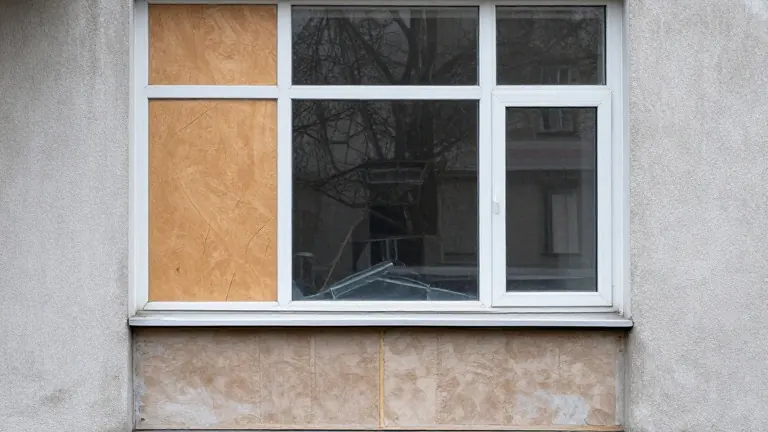
Kiev, Ukraine, residents are grappling with a critical shortage of replacement windows as winter approaches following continued Russian missile and drone attacks. Oleksandra Horban, who lives in a ground floor apartment in a Soviet-era housing block, still finds shards of glass in her home weeks after a missile exploded near her building in October. The blast shattered hundreds of windows on the building's facade, leaving families exposed to the cold.
The scarcity has forced many households to rely on temporary fixes such as fiber boards and tarps. Some panels feature small cutouts covered with plexiglas to allow daylight into the apartments. For Horban, the cost of new windows for her unit stands at approximately $1,700, which is more than three times the country's average salary. Government compensation for these repairs can take three to four months to arrive, a delay that is difficult for low-income residents to manage.
The World Bank estimates that three million housing units were destroyed or severely damaged by the end of last year. This damage added $90 billion to Ukraine's total reconstruction needs. While local manufacturers can produce replacement windows, the bottleneck lies in the labor force. Mykhailo Orlenko, executive director of the Ukrainian Association of Transparent Structure Manufacturers, noted that many qualified installers were called for military service. "The market lost a large number of these specialists," Orlenko said.
Factories can produce windows in about 10 working days, but installation often takes much longer due to wait times for available teams. Installation bills have at least doubled in the past year. Oleksandr, a 42-year-old installer with 25 years of experience, described the challenges of working during power outages. His team recently replaced balcony doors and windows on a fourth-floor apartment without elevator service. "It was 18 trips up and down the stairs, carrying weight," he said. "We did not wait for the electricity to return; we started working immediately."
To address the labor gap, a vocational training institute in Kiev opened a Union European-funded facility in March. Twenty-six high school students began a three-year program to become window, door, and facade installers. The students practice on simulated window openings built from brick, cement block, wood, and synthetic materials. Their classes are frequently interrupted by missile and drone alerts. The program was established after professional associations successfully lobbied the government to formally recognize window installation as a profession.
Orlenko stated that graduates can expect starting salaries of around $900, which is comparable to the earnings of law graduates. This wage parity reflects the acute shortage of skilled labor in Ukraine. Instructor Volodymyr Tserbii expects the apprentices to play a key role in the country's long-term reconstruction efforts. Government planners estimate that repairing homes, schools, roads, and power plants will take at least a decade.
For Horban, the wait for permanent repairs adds to daily hardships. Her apartment lacks gas, forcing her family to cook with a portable cylinder. A leaking ceiling in the kitchen has worsened the damage inside. Her two-year-old son, Viacheslav, is also affected by the war. He often presses his nose to a surviving window pane and asks his mother if more bombings will come, describing the explosions as "bam bam."