Army sets Nov. 24 deadline to blast 68 barrels of unstable lead azide
Officials in Middletown face a tight window before cold weather makes the chemical compound more dangerous.
By Matthew Brooks ·
Residents near the Iowa Army Ammunition Plant in Middletown are told to expect two controlled detonations by Tuesday, Nov. 24. The U.S. Army announced the timeline in a Saturday court filing, stating that a drop in temperature increases the risk that the stored chemicals will explode on their own.
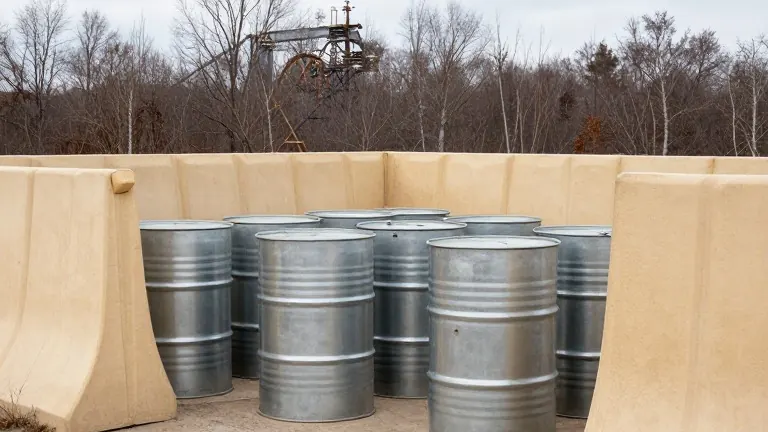
The facility is located in a town of approximately 320 people, situated west of Burlington and the Mississippi River. During routine inspections, workers discovered 68 barrels of degraded lead azide. This compound is used to ignite military ammunition, but the specific batch had broken down to a point where normal handling became unsafe.
Lead azide is sensitive to temperature changes. When the material cools, it becomes more prone to detonation from friction or heat. Acting Army Secretary Adam Telle wrote on X that the Army delayed the work to wait for the latest possible moment before a forecasted temperature drop. The filing notes that recent temperature swings have increased the threat to public safety if the material is not destroyed.
The Army originally planned to detonate the explosives on Friday, Nov. 20. That date was postponed after local residents and officials raised health and environmental concerns. Environmental groups have sued in federal court to stop the blast, but the Army argues that a controlled explosion is safer than an uncontrolled one.
To manage the release, crews will build two-story sand barriers around the site. They will also wet the soil and spray water to trap dust and contain debris. The Army says the operation will have no significant impact on the surrounding environment, a claim that has drawn scrutiny from public health officials.
Because transporting the unstable material by truck is risky, the Army obtained an emergency permit from the U.S. Environmental Protection Agency on Nov. 13 to destroy the waste at the plant. Matthew McConnell, an assistant professor of chemistry at Western Illinois University, noted that even small quantities of the degraded compound can detonate with heat or friction.
The Army intends to act by Tuesday to protect the public from the threat of an uncontrolled explosion.