Judge April Perry rejects DOJ motion to remove her from Broadview Six review
The federal judge ruled Thursday's request came too late and relied on a misunderstanding of legal procedure.
By Marco Alvarez ·
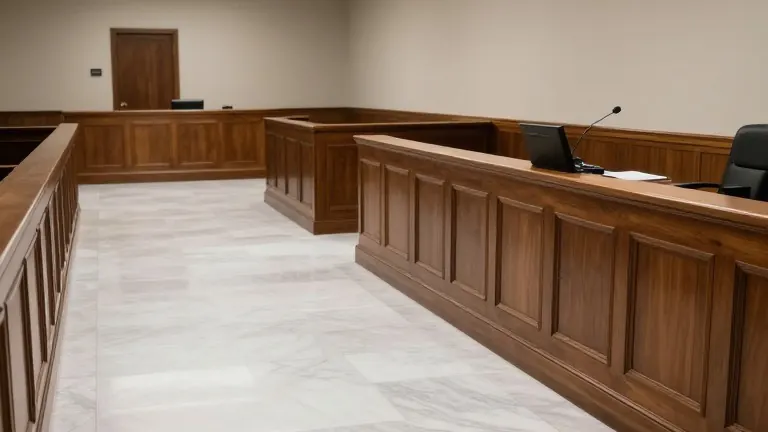
U.S. District Judge April Perry denied a Department of Justice request to step aside from the Broadview Six investigation on Friday.
Perry issued the ruling less than 24 hours after Associate Attorney General Stanley Woodward filed the motion. She stated the government waited until the eleventh hour to raise the issue.
Woodward argued in a filing on Thursday that Perry could not decide on privilege claims because she is also conducting a criminal contempt inquiry. He asked her to appoint a special master or another disinterested judicial officer to handle those decisions before a hearing scheduled for December 2.
Perry disagreed with that premise. In an order posted to the court docket Friday morning, she said the motion reflected a basic misapprehension of what a special master does. She noted that a special master is an arm of the court and does not have the power to issue final rulings on legal issues.
The judge wrote that the court would still have to make its own determinations regarding privilege even if a special master was appointed. She added that the case law cited by Woodward was off point. Perry asserted that the Supreme Court has held that a judge has the inherent power to conduct an independent investigation into attempts to defraud the court.
Perry also called the motion untimely. She pointed out that the government has known for more than five months that she planned to hold a hearing on alleged prosecutorial misconduct. The judge noted that the government waited until 6:50 p.m. the night before potentially privileged materials would be tendered to file its motion.
The ruling keeps in place an order for attorneys representing three assistant U.S. attorneys to submit written details about their expected testimony by Friday. They must explain why any potential privilege should not apply. Responses from the government on what it thinks should be privileged are due by Wednesday.
Attorneys for current prosecutors William Hogan, Matthew Skiba, and Andres Almendarez told the judge on Monday that they do not intend to assert privileges individually. Shelly Kulwin, who represents Hogan, said Hogan had nothing to hide. Kulwin stated that Hogan is happy to fully explain his thought processes and who he talked to. U.S. Attorney Andrew Boutros did not attend that hearing, and no private attorney has signed on to represent him. The Broadview Six indictment arose from Operation Midway Blitz. Felony charges alleged six defendants crowded around an ICE agent's vehicle outside the Broadview facility in September 2025. Boutros dropped all charges after it was revealed the lead prosecutor allegedly committed misconduct before the grand jury.