Chicago Alderpersons Dispute $75 Million Pension Funding
Council members argue the mayor's budget incorrectly applies parking meter revenue, creating a potential fiscal gap ahead of the election.
By Andrew Hayes ·
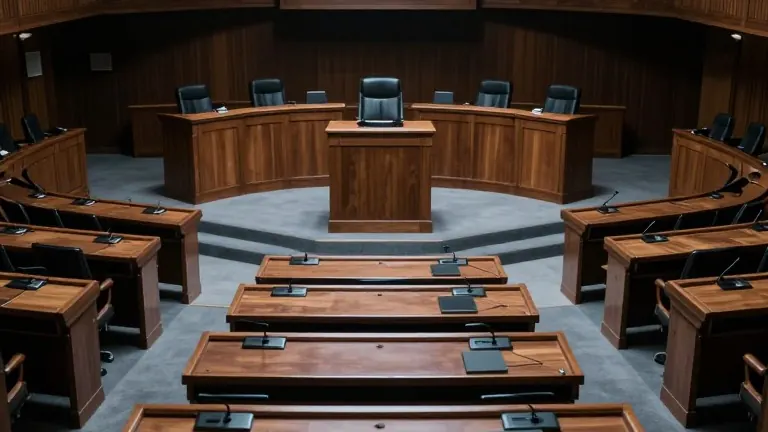
Seventy-five million dollars in revenue from the sale of city parking meters is at the center of a new budget dispute in Chicago. The disagreement involves how Mayor Brandon Johnson intends to apply these funds in his proposed budget. City Council members who approved the parking meter deal last month say the money was earmarked for pensions. The council voted 46 to 3 to approve the transaction. Johnson’s budget proposal uses the $75 million as part of a supplemental pension payment. Several alderpersons argue the funds should be added on top of that payment instead.
Ald. Nicole Lee, representing the 11th Ward and serving as vice chair of the Budget Committee, criticized the mayor’s approach. She stated that the city cannot champion workers while failing to secure pensions for those already retired. "We can't say that we want these things over here, championing workers and then not not doing the things to take care of the people who have been working and are now retired and you know are worried about whether or not their pensions are going to be around," Lee said.
Ald. Scott Waguespack, representing the 32nd Ward, joined the criticism. He asserted that the council had a specific purpose for the $75 million. "So what we're saying is, we had a very specific purpose for the 75 million. You need to adhere to it in this budget," Waguespack said. Members of the Budget Accountability Coalition are requesting a special City Council meeting for next Monday to clarify the spending plan.
Mayor Johnson defended his budget structure during a news conference promoting a community investment initiative. He noted that the original language governing the funds did not specify exactly how they should be applied. "If the city council decides to use their authority to put an additional $75 million on top of the supplemental payment, of course, again that is their prerogative," Johnson said. He added that he looks forward to continuing collaboration with council members to pass the budget.
If the council adopts the interpretation that the $75 million is additive, a gap of that amount will appear in Johnson’s budget proposal. The financial dispute coincides with an increase in mayoral challengers. Fifteen individuals have filed nominating petitions to run against Johnson in the mayoral election scheduled for next February.
When asked about the number of candidates seeking the office, Johnson responded that there is effectively only one candidate. "Well, I think the best way to interpret it is that there's only one, and I'll be I'll remain the mayor of Chicago," he said. Dick Simpson, a professor emeritus at the University of Illinois Chicago, described Johnson’s path to reelection as narrow and hazardous. Simpson said city finances are likely to be a central issue in the campaign, asking voters who can right the finances of the city.
The city council has begun a review of the mayor’s $17.6 billion budget. The pension allocation remains a point of contention during this review process. Johnson’s administration faces scrutiny over its management of city finances as the election season progresses.
Source: ABC7 Chicago · original report published
More Politics · Chicago news · Report a business · Got a Story?