Nearly 10% of the electorate: 640,000 youth may claim 12 Knesset seats
With turnout expected to exceed 80% in some groups, first-time voters aged 18 to 22 hold a decisive influence on Tuesday's ballot.
By Leila Mansour ·
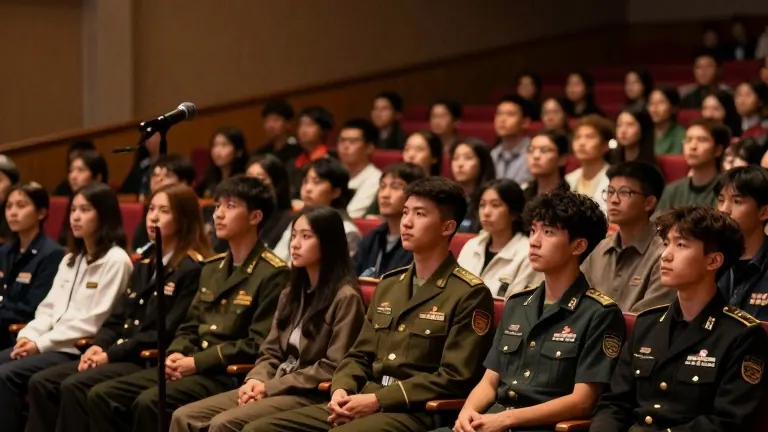
Yael Chernyvsky, an 18-year-old from Ramat Hasharon, is casting her first ballot on Oct. 27. She told the Jewish Telegraphic Agency that she is voting to change the country's future. Chernyvsky is studying in an army preparation program in the Negev and blames Prime Minister Benjamin Netanyahu's government for the nation's current state. She plans to support one of the opposition parties in the change bloc, likely the Democrats led by Yair Golan or Yashar led by Gadi Eisenkot.
Chernyvsky is part of a large voting bloc that could shape the outcome of the election. The Israel Democracy Institute estimates that 640,000 Israelis aged 18 to 22 are eligible to vote. This group represents nearly 10% of the total electorate. Their collective choice could determine up to 12 seats in the 120-member Knesset.
Turnout among this demographic is expected to be high. Tammy Hoffman, head of the education policy program at the IDI, said that if participation matches their research projections, first-time voters will make a difference. A May survey by Hoffman's team found that 80% to 95% of potential young voters across various population groups said they would likely vote. Secular Jewish youth showed the highest certainty, while 87% of Arab respondents indicated they intended to participate.
This level of engagement is higher than in the United States, where youth turnout in the 2024 presidential election was 47%. A separate poll for Ynet and Yedioth Ahronoth found that 67% of young respondents were certain they would vote, with another 19% likely to do so. National security and the cost of living were the top priorities for both Jewish and Arab respondents in these polls.
Hoffman noted that many in this age group lived through the pandemic, judicial reform protests, and the Oct. 7 Hamas attack during their adolescence. While military service often correlates with nationalist stances, Hoffman emphasized that it can also raise questions about war goals. In a Sept. 23 N12 poll, 74% of young people identified as right-wing or center-right, while 23% identified as left-wing or center-left. If the election were held at that time, 16% would vote for Yashar and 14% for Netanyahu's Likud.
Omer Gross from Jerusalem, who is in an army-prep program in the Golan, plans to vote for the Religious Zionist party led by Bezalel Smotrich and Moshe Feiglin. He supports Smotrich's policies in the West Bank despite disagreeing with his actions in Gaza. Tomer Shiloh from Herzeliyah, who attends the same program, plans to vote for the Change bloc, specifically Eisenkot or Naftali Bennett. Shiloh wants the next government to mandate IDF service for Haredi men and lower the cost of living.
Sgt. M, a 22-year-old reservist, is voting for the Democrats party largely for economic reasons. He cited the high cost of university tuition and the difficulty of balancing study with reserve duty. Khalel Alaa Sabeh, an 18-year-old from Shef-Amra, plans to vote for an Arab party to address resource gaps and crime in the Arab community. He urged his friends to vote, stating that he does not want to leave the country regardless of the result.
Source: The Jerusalem Post