Judge Reyes orders formal probe into Trump team ethics over golf course dispute
The federal judge will appoint a special master to examine claims that government attorneys misrepresent facts in a case tied to a major renovation of the East Potomac Golf Links.
By Matthew Brooks ·
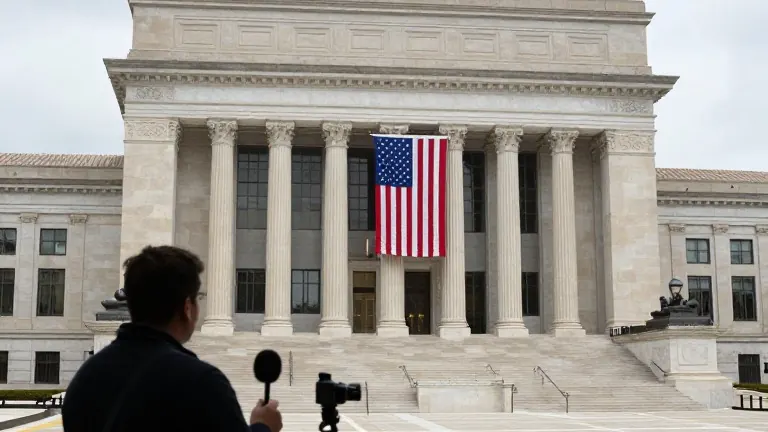
U.S. District Judge Ana Reyes announced on Friday that her court will launch a formal inquiry into the conduct of attorneys representing the Trump administration. The investigation will determine whether government lawyers violated ethical rules during a legal battle over a historic golf course near the National Mall. Reyes also stated the court will appoint a special master to examine specific allegations of misrepresentation by agency officials and Justice Department staff.
This move marks a sharp departure from the judge’s previous stance in the matter. Until this month, Reyes had rejected multiple requests from plaintiffs for the court to intervene, stating she trusted the government’s legal team. The shift occurred after President Donald Trump issued a series of posts on Truth Social beginning on Oct. 18. These posts described a plan to shut down the East Potomac Golf Links for 15 months starting Nov. 15 to begin construction on a world-class facility.
The presidential announcements created tension in courtrooms across Washington. Officials from the Interior Department, the Justice Department, and the National Park Service struggled to confirm the existence of these plans during hearings. Reyes expressed uncertainty about which version of the facts to believe. The confusion was resolved on Wednesday night when the Justice Department filed a notice confirming the plans were real. The notice stated that the National Park Service would submit a design by Tom Fazio to the National Capital Planning Commission for review on Friday.
During the Friday hearing, Reyes questioned Associate Attorney General Stanley Woodward Jr. about the timeline of the project. She pressed him on how the president's public desires became urgent government plans. Reyes frequently paused the hearing to review previous trial transcripts in her chambers. She is specifically examining whether a National Park Service official was told to omit details from a court declaration and if witnesses provided misleading testimony regarding the scope of the closure and renovation.
At one point in the proceedings, Reyes read the code of conduct to the government attorneys regarding the presentation of false information. She focused her questioning on the discrepancy between Trump’s social media posts and the filings in court. When Woodward suggested that tree cutting began only this week as part of the closure preparation, Reyes immediately interrupted. She noted that the tree cutting occurred earlier in the month. She allowed Woodward to correct himself and clarify that the early tree work was separate from the formal plan to close the links.
The golf course dispute is one of two simultaneous cases in the same federal courthouse challenging the administration’s use of executive power. The second case involves the construction of a 250-foot memorial arch at Memorial Circle. This structure would stand 100 feet taller than the Statue of Liberty from base to torch. The two project sites are located less than three miles apart along the Potomac River.
U.S. District Judge Tanya Chutkan is presiding over the arch case. She is reviewing a motion to temporarily halt construction, which plaintiffs say could begin as early as Nov. 5. A small group of veterans and an architectural historian filed the lawsuit, arguing that Congress must endorse the project before work can start. The plaintiffs argued in their filing that the public interest favors blocking construction to prevent the arch from becoming a fait accompli before the court issues a final decision.
Legal experts view these disputes as tests of presidential authority rather than simple construction disagreements. David Super, a law professor at the Georgetown University Law Center, observed that past administrations generally attempted to act within the law. He noted a change in approach under the current administration. Super said the current strategy suggests that if federal courts cannot stop an action, the executive branch may proceed regardless of legality.
Super warned that this approach could cause long-term damage to the country. He argued that the assumption that actions are legal is eroding. The formal inquiry ordered by Reyes will now scrutinize whether the government’s legal representatives upheld that standard while pushing forward with the golf course renovation.
The special master will review the evidence presented in the golf course case. This includes the Truth Social posts, the Justice Department’s Wednesday notice, and the testimony provided by Woodward. The court has not set a deadline for the completion of this inquiry.