U.S. Corn Seed Costs 68% More Than Brazil's
A joint report by Kynetec and the National Corn Growers Association details price gaps across seeds, chemicals, and market structures from 2023 to 2025.
By Marco Alvarez ·
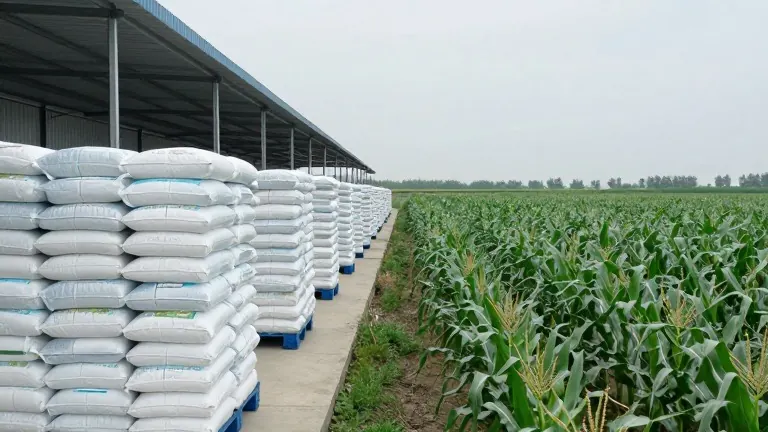
U.S. farmers pay a 68% premium over Brazilian growers for corn seed, according to a new comparative analysis.
The study, conducted by Kynetec in partnership with the National Corn Growers Association, examined input costs for corn and soybeans between 2023 and 2025. It found that American prices exceed Brazilian levels across nearly all categories, with the widest disparities in corn seed, fungicides, and herbicides. The report uses purchasing power parity to isolate currency effects from underlying market differences, comparing prices in U.S. dollars per pound for seed and per liter or kilogram for crop protection products.
The National Corn Growers Association has raised concerns about rising input costs for several years. In 2021, phosphate prices spiked after the Mosaic Company and later J.R. Simplot successfully petitioned for countervailing duties on imported phosphate. Corteva Agriscience subsequently secured duties on 2,4-D supplies, and Bayer recently filed a similar petition for imported glyphosate. These trade remedy actions have coincided with sustained high input costs for U.S. producers.
Soybean seed prices in the United States averaged a 24% premium over Brazil during the study period. While Brazilian varieties often include both herbicide and insect resistance, U.S. farmers typically use herbicide-only varieties. The price gap for herbicide-resistant soybean seed exceeded the overall soybean seed differential, indicating that U.S. growers pay more for specific trait packages regardless of included resistances.
Fungicide markets show some of the largest price differences, with U.S. prices sometimes doubling Brazilian levels. This gap reflects structural differences in supply. In Brazil, the top five global research and development manufacturers account for less than half of fungicide supply for corn and soybeans. In the United States, these manufacturers control roughly three-quarters or more of the market. U.S. growers also use a higher share of multi-molecule formulations compared to the lower-cost single active ingredients favored in Brazil.
Herbicide prices in the United States were higher than in Brazil, with many comparisons showing U.S. costs near double Brazilian levels. Glyphosate, a widely used active ingredient, cost U.S. growers approximately 35% more in 2025 than Brazilian growers. Insecticide gaps also favored Brazil, with U.S. corn insecticide prices averaging 87% higher from 2023 to 2025. U.S. soybean insecticide prices were 31% higher over the same period. Brazil uses a higher share of lower-cost molecules, accounting for roughly 60% of corn and 50% of soybean insecticide treatments.
Matt Frostic, NCGA President from Applegate, Michigan, chairs the Inputs Task Force that commissioned the research. "This work confirms our fears: We are paying substantially more for our inputs. But the price gouging that is happening for U.S. farmers is even worse than many of us suspected," Frostic said. He noted that corn farmers are on track to lose money for a fourth consecutive year. Krista Swanson, NCGA chief economist, added that rising input costs have placed intense pressure on the farm economy, noting that costs to put a crop in the ground have climbed to unsustainable levels.
The National Corn Growers Association is calling for increased transparency from input providers and legislative reform to the countervailing duty process. The group is pursuing policy initiatives to make U.S. farmers more globally competitive, citing Brazil's imposition of tariffs on U.S. ethanol alongside its lower input costs. The analysis relies on FarmTrak and sigma Seed farmer-panel data for both countries, covering a five-year trend period with specific comparisons for 2023 through 2025.
More Business · Cicero news · Consumer Alerts · Report a business · Got a Story?