26.3% of EU Youth at Poverty Risk Amid Pan-European Protests
Student-led demonstrations across Europe have resulted in political upheaval in Serbia and widespread property damage in France, driven by housing and education costs.
By Andrew Hayes ·
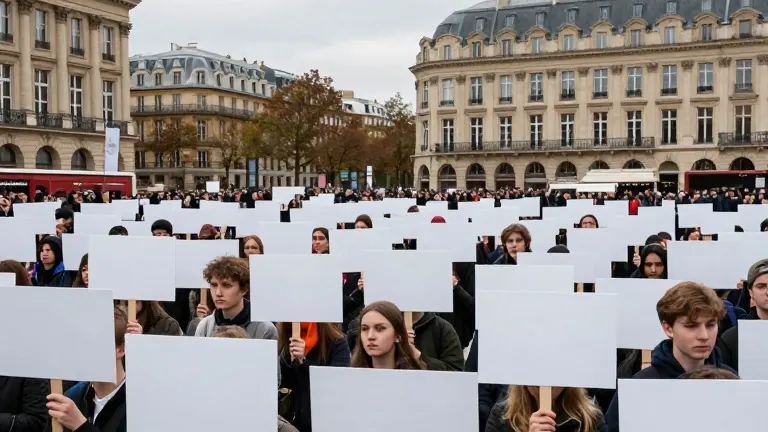
Student-led protests across Europe have shifted from general dissatisfaction to tangible political change, culminating in the election defeat of Serbian President Aleksandar Vucic this weekend. The demonstrations, which have spanned cities from Milan to Belgrade over the past two years, were fueled by grievances over housing, education, and economic stagnation.
In Serbia, the nearly two-year campaign against perceived corruption and authoritarianism ended with Vucic's loss in the recent election. Stasa Piletic, a student protester, expressed relief at the outcome, stating, "I feel that we finally moved from protests to responsibility." Luka Stojakovic, another protester, addressed concerns about the students' lack of governing experience by noting, "We have seen where people with political experience have brought us."
Violence has marked the movement in other regions. In France, thousands of shops have been damaged or looted in recent weeks, prompting police to deploy stun grenades and water cannons. Maya Gourdel, a 19-year-old student in Brussels, cited the slogan "If we burn, you burn with us!" from the film The Hunger Games as a rallying cry for youth movements. She argued that media attention only increased when peaceful efforts were ignored and unrest escalated.
The underlying economic data highlights the pressure on young people. A 2025 European Union survey found that 40% of those aged 16 to 30 worry about rising prices and the cost of living. The risk of poverty or social exclusion was highest for those aged 18 to 24, affecting 26.3% of that demographic, compared to 18.8% for adults aged 65 and over. In Milan, 21-year-old student Chiara described crumbling school buildings and a shortage of teachers, while noting that graduates often face underpaid work and high housing costs away from home cities.
Infrastructure issues are also a focal point. In a suburb north of Paris, 17-year-old Bilal Narjissi reported that his school suffered from staff shortages and a previous rat infestation. He added that students were evacuated last year after a roof collapsed in the courtyard, an incident that left no one injured. In Albania, protests against Prime Minister Edi Rama have expanded to Tirana and other cities. Architecture student Xyke Kurti criticized the government for spending 130 days without engaging students, noting that many young Albanians now plan to leave the country.
The movement is also driven by resentment over intergenerational wealth distribution. The OFCE think tank reported that people over 60 comprise a quarter of France's population but hold 60% of its wealth. A French government report from October indicated that pension spending rose by 2.5 percentage points of GDP between 2000 and 2023, while education spending dropped by 0.5 points. Currently, 32% of the education ministry's budget in France is allocated to pensions. A demonstration is scheduled in Germany this weekend to address cost of living and school conditions.