1845: The Founding Year of Chicago's Oldest Nonprofit and Its Halloween Roots
Gus Noble, president of the Chicago Scots, traces the city's Halloween traditions to Scottish customs brought by immigrants in the early 19th century.
By Leila Mansour ·
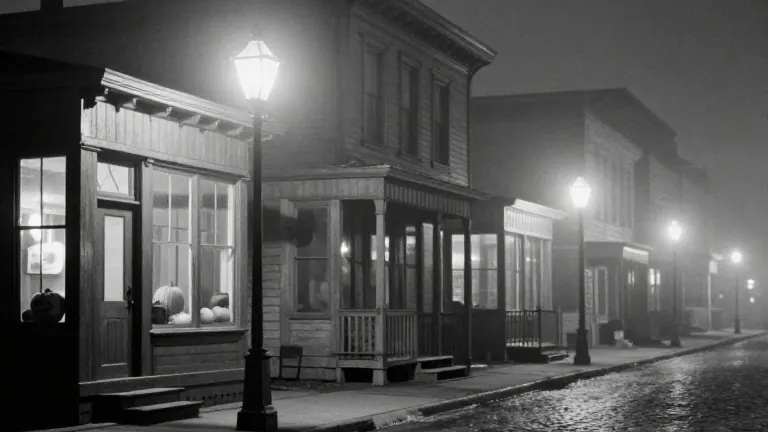
In Chicago, the origins of Halloween are tied to Scottish immigrants who arrived in the early to mid-1800s. Gus Noble, president of the Chicago Scots and a native of Scotland, stated that the holiday's current components, such as trick-or-treating and costumes, derive from these early traditions. The Chicago Scots organization, founded in 1845 as the Illinois St. Andrew’s Society, is the oldest nonprofit in Illinois.
Noble, who moved to the United States in 1992, described Halloween in his hometown of Duns, Scotland, as a spiritual and mystical occasion. He explained that the holiday evolved from the Celtic festival of Samhain, marking the end of summer and the thinning of the veil between the living and the dead. In Scotland, children engaged in 'guising,' or dressing in disguises, to protect themselves from spirits and earn fruit or nuts through performances such as poetry or song.
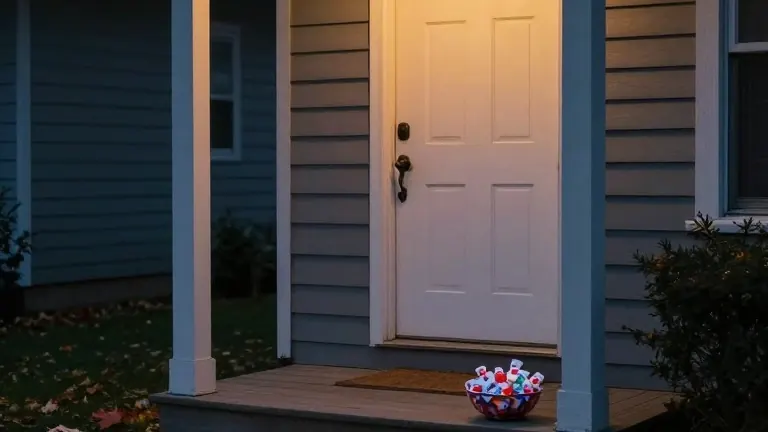
The practice of collecting treats in Chicago differs from the Scottish custom of performing for food. Noble noted that American children often receive candy without providing a service, which he found disappointing. He recalled that in Scotland, he sometimes had to 'duke' for apples in troughs or bite sticky treacle scones hung from strings with his hands behind his back. Despite these differences, Noble sees connections in the modern holiday, such as the tradition of sitting on porches to engage with visitors, which mirrors the Scottish custom of placing empty chairs outside for ancestors.
Early Chicago newspapers documented the holiday's evolution from a Scottish observance to a citywide celebration. In January 1859, The Weekly Chicago Times noted that the day became hallowed due to its association with Christian feasts. By 1860, the holiday was described as lending a generous hand to merry maskings among local Scots. The Tribune reported in 1861 that the festival was particular to Scotch and English citizens, who celebrated the mischief of fairies. Robert Burns’ 1785 poem 'Halloween' encapsulated these Scottish traditions.
By the 1860s, the holiday expanded beyond the Scottish community. In 1865, the Tribune reported that young Chicagoans enjoyed making and eating molasses candy. The following year, McVicker’s Theatre in the Loop prepared to stage a drama titled 'All Hallow Eve; Or, Snap-Apple Night.' In 1869, the Chicago Evening Post noted that the festival was celebrated in Catholic churches, including St. Mary’s, where a reverend delivered a free lecture on Purgatory. The Inter Ocean later reported that the Young People’s Mutual Improvement Association of the First Scotch Church held literary and musical entertainment for the occasion.
Traditional Scottish customs focused on divinations regarding love and romance rather than collecting candy. Accounts from the 19th century described practices such as peeling an apple to predict a future husband's initial or burning nuts to forecast marital harmony. These rituals occurred between sunset and midnight. The holiday also featured a large supper with stews and oatmeal pudding, as noted by The Inter Ocean in 1875, which described the night as standing upon the threshold of winter.
As the holiday became more Americanized, new forms of celebration emerged. In 1875, because October 31 fell on a Sunday, the holiday was marked on Monday. Northwestern University students participated in pranks, including tying cows to the steps of the Women’s College in 1877. In 1880, masked students placed a goat in a cottage, leading to a physical altercation. By 1883, Evanston deployed extra police for the night. Starting in the late 1870s, the Confectionary Benevolent Association of Chicago began hosting a Hallow Eve ball, signaling the holiday's transition into a broader American social event.
More Culture · Chicago news · Report a business · Got a Story?