
Danish Supreme Court hears case on housing law tied to tenant origin
Seven families from Helsingor argue a 2018 statute forces evictions based on statistical labels that define residents as non-Western.
By Aiko Sato ·
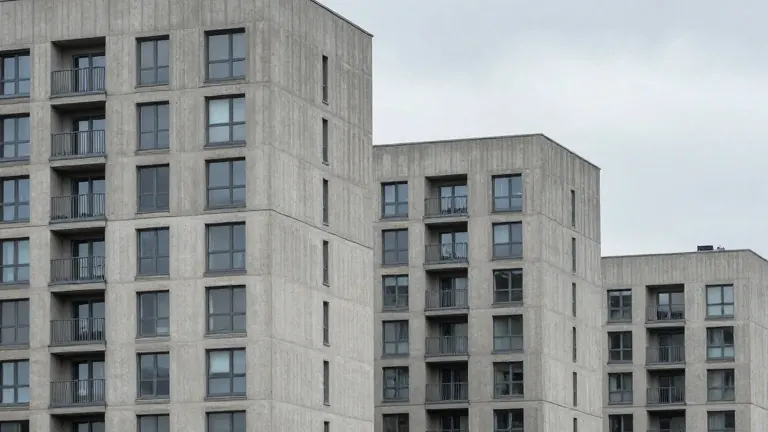
The Danish Supreme Court began a two-day hearing on Friday in Helsingor, a coastal city north of Copenhagen, to review a housing dispute involving seven families. The tenants are challenging their termination of leases under a 2018 law that targets social housing estates with high populations of residents classified as non-Western. Eddie Khawaja, the families' lawyer, told AFP that the core issue is whether the criteria regarding tenant origin are neutral.
The statute, formerly known as the ghetto law, operates through annual lists published by the government each December 1. An area qualifies as a parallel society if it has at least 1,000 residents, more than 50 percent of whom are non-Western immigrants or descendants, and meets at least two of four criteria related to unemployment, crime, education, or income. Areas designated as transformation areas, or hard ghettos, must reduce public family housing to 40 percent by 2030 through sales, demolition, or conversion.
The definition of non-Western excludes the EU, plus Andorra, Australia, Canada, Iceland, Liechtenstein, Monaco, New Zealand, Norway, San Marino, Switzerland, the USA, and the Vatican State. Statistics Denmark, under the Ministry for Economic and Interior Affairs, applies this label to anyone born in Denmark if neither parent is a Danish citizen born in the country. A UN Human Rights Office report from 2020 noted that this statistical label disproportionately describes Denmark's non-white, non-European ethnic populations.
In Helsingor, landlord Boliggarden announced in early 2020 that it would renovate 96 apartments at the Nojsomhed estate and subsequently terminated the leases. Riad, a 33-year-old plaintiff who withheld his family name, told AFP that the landlord wanted to avoid the hard ghetto label and forced the move despite other available solutions. Tenants' associations estimate that approximately 11,000 people across Denmark will have to leave their homes by 2030 under the current rules.
The government introduced the law in 2018 as part of a plan called One Denmark without Parallel Societies: No Ghettos in 2030. Kaare Dybvad Bek, the interior minister in 2021, stated that high concentrations of non-Western foreigners increase the risk of religious and cultural parallel societies. The current four-party coalition, which has held power since June, includes the Green Left party, which voted for the law in 2018. Jacob Mark, the current minister for children, elderly affairs and housing, belongs to that party.
The Court of Justice of the European Union ruled in December 2025 that nationality or country of birth alone does not determine ethnic origin, but a neutral criterion covering many origins could be linked to ethnicity. This ruling contradicts the Danish government's position and earlier lower court decisions in the Helsingor case, which found that the non-Western label does not describe a specific ethnic group. The Danish Supreme Court must now decide if the criterion rests on ethnic origin and if it results in less favorable treatment, such as an increased risk of early lease termination.
Sophie Haestorp Andersen, the minister for social affairs and housing in January, told a parliamentary hearing that authorities must continue applying the law until the Eastern High Court rules. No official date has been set for the verdict, though reports suggest a decision could be issued later this month. If the families win, they would likely be rehoused in similar units.
More Business · Consumer Alerts · Report a business · Got a Story?