Democrats Take Control of Both Chambers of Congress in Midterm Elections
Voters in Cook County and across the nation rejected the Republican agenda, leading to a Democratic majority in the House and Senate.
By Andrew Hayes ·
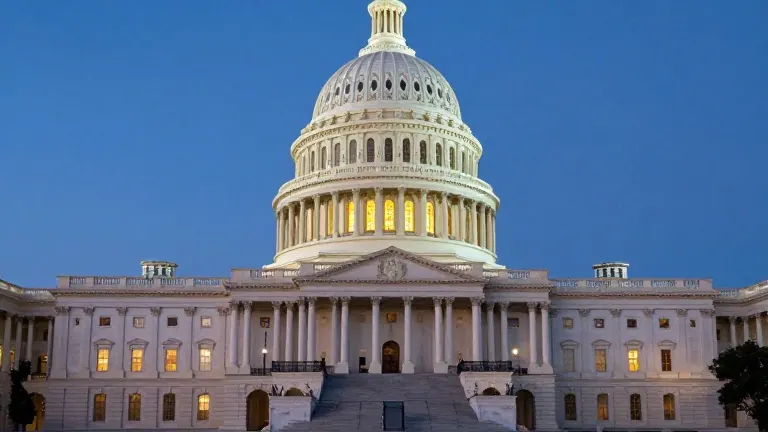
Residents of Cook County now face a federal government where Democrats hold the majority in both the House of Representatives and the Senate. This shift changes the balance of power in Washington, D.C., as the party that opposed President Donald Trump’s policies secures control of the legislative branch for the first time since the early 2000s.
The path to this outcome began with a campaign season marked by low approval ratings for the sitting president. Voters expressed dissatisfaction with economic conditions, specifically rising gas prices following the Iran conflict that started in late February. Many also cited corruption and the handling of immigration enforcement as key reasons for their votes.
Democrats performed well in states that have historically favored Republicans. The party flipped six Senate seats previously held by Republicans in Maine, Iowa, Kansas, Ohio, South Carolina, and Texas. South Carolina was an early indicator of the night’s trajectory, falling to Democrats despite expectations that it would remain a stronghold for the Republican base.
President Trump campaigned heavily for Republican candidates, arguing that his presence was a decisive factor in the election. He maintained a tight schedule of events in the final month before the vote. However, his attempts to attribute economic issues to his predecessor, Joe Biden, did not alter the outcome. Voters in the exit polls indicated that opposition to Trump was a primary motivator.
Exit polls, 43% of surveyed voters said they voted partly to express opposition to Trump. Seventy-one percent of voters, including 41% of Republicans, stated that Congress had not provided sufficient oversight of the executive branch. Affordability, corruption, and immigration were also listed as central issues by a large portion of the electorate.
In response to the results, President Trump posted on social media that he was not technically on the ballot. He claimed that his presence on the ticket would have resulted in a landslide victory for the Republican Party. This statement came shortly after the initial projections confirmed the Democratic takeover of both chambers.
The new leadership structure will be formally established in the coming months. House Minority Leader Hakeem Jeffries of New York is expected to become the Speaker of the House. He will need 218 votes to secure the gavel when the new Congress convenes on Jan. 3. This would make him the first Black Speaker in the history of the United States.
Senate Democratic Leader Chuck Schumer of New York is expected to return to the role of Senate Majority Leader. He previously held this position for four years. With control of the Senate, Democrats are positioned to influence the confirmation process for federal judges, including potential Supreme Court nominees appointed by the president in the remaining years of his term.
Democrats have outlined plans to launch investigations into the Trump administration. Representatives Robert Garcia of California and Jamie Raskin of Maryland are leading these efforts. They intend to examine the president’s business dealings, the administration’s immigration policies, and specific White House renovation projects.
The Republican Party faces internal decisions regarding its future leadership. Senate Majority Leader John Thune of South Dakota and House Speaker Mike Johnson of Louisiana must determine their roles as the party moves into the minority. Some Republican lawmakers are calling for new leadership, while others may seek to pass budget and debt ceiling legislation during the lame-duck session before Jan. 3.
More Politics · Chicago news · Report a business · Got a Story?