Exit Polls Show Netanyahu and Eisenkot Blocked at 51 Seats
Israel's election night data indicates a split parliament where Arab-led parties hold the balance of power, leaving no clear path to a majority.
By Marco Alvarez ·

Exit polls from major Israeli television networks indicate that 51 seats in the 120-seat Knesset went to Prime Minister Benjamin Netanyahu’s religious-national bloc, leaving no side with the 61 seats required to form a government. The data suggests the country is headed for weeks of coalition negotiations or possibly new elections, as the opposition bloc led by former military chief of staff Gadi Eisenkot also appears to have won approximately 51 seats. The remaining 19 seats are projected to go to Arab-led parties, placing them in a decisive position to choose the next prime minister.
As of early Wednesday morning, Israel’s Central Elections Committee reported that 22.02% of the vote had gone to Likud, Netanyahu’s party, while 15.46% had gone to Eisenkot’s Yashar party. This count was based on just under one-third of the ballots tabulated. Final official results are expected later this week, though analysts note that exit polls are subject to potential error and may vary from the final tally.
The election outcome appears to be a rebuke for Netanyahu, the country’s longest-serving prime minister, who addressed his supporters in Jerusalem just after 3 a.m. on Wednesday. His party secured the largest single share of the vote, but support for his coalition dropped sharply according to the polls. In Tel Aviv, Eisenkot rallied his supporters early in the day, suggesting his disparate coalition could secure a solid majority in the next parliament.
Arab parties could play a key role in forming the next government. In his election night speech, Netanyahu repeated his refusal to build a cabinet that relies on Arab parties. Eisenkot has signaled he is ready to work with them under certain conditions, a stance that could risk alienating some of his other partners. Mansour Abbas, who leads the Ra’am party, watched the exit polls on a screen at an event in Sakhnin, an Arab city in northern Israel, where supporters of his small party erupted in celebration.
The campaign focused heavily on the enduring trauma of the Hamas-led attack on Oct. 7, 2023, when militants killed 1,200 people and abducted 251 others. Netanyahu rejected an investigation into the security failures that day, blaming the army, while his opponents demanded a commission of inquiry. The issue of ultra-Orthodox exemptions from military service also divided voters, with Eisenkot vowing to end the de facto exemptions after losing his son and two nephews in combat in Gaza.
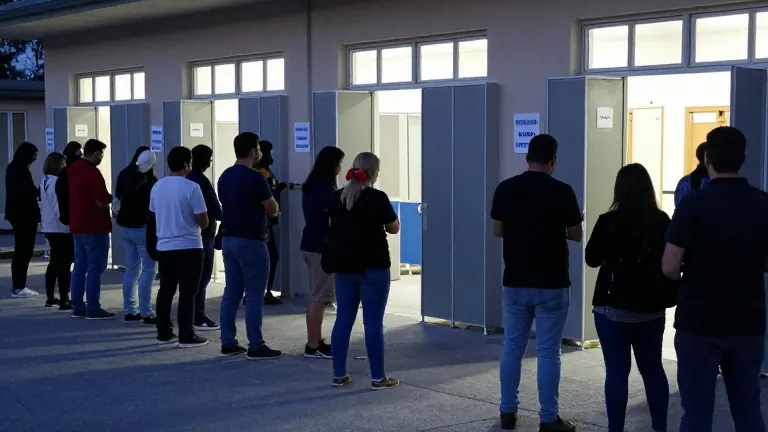
Voter turnout reached 77.7% of eligible voters as polls closed Tuesday night, according to the Central Elections Committee. This figure marks the highest turnout since 1999 and is more than seven percentage points higher than in the previous election in 2022. The high participation rate reflects the stakes of the contest, which was widely viewed as a referendum on Netanyahu’s leadership.
No major candidate advocated a return to the peace process, and voters largely opposed the creation of a Palestinian state. Even Abbas, whose party joined a governing coalition in 2021, focused his campaign on crime in Arab communities rather than broader diplomatic issues. The final composition of the Knesset will determine whether Eisenkot can assemble a government or if Israel returns to the polls.
More World · Chicago news · Report a business · Got a Story?