Cook County readers follow second deadly Spanish train crash before November elections
A rear-end collision near Urda killed 69 people, raising questions about safety on the Madrid-Sevilla line amid Spain's upcoming national vote.
By Aiko Sato ·
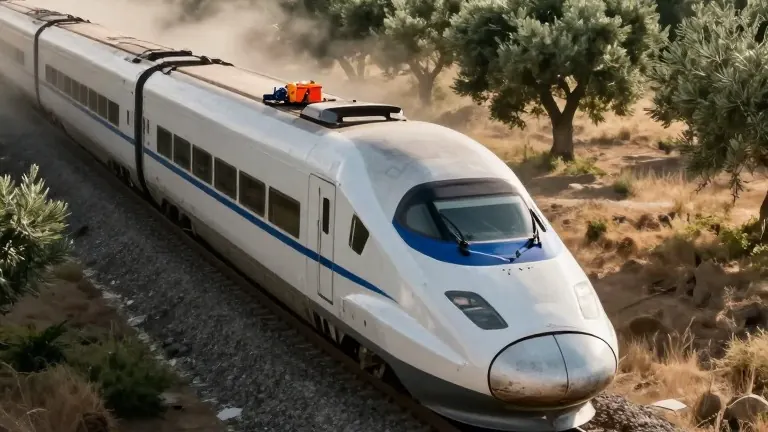
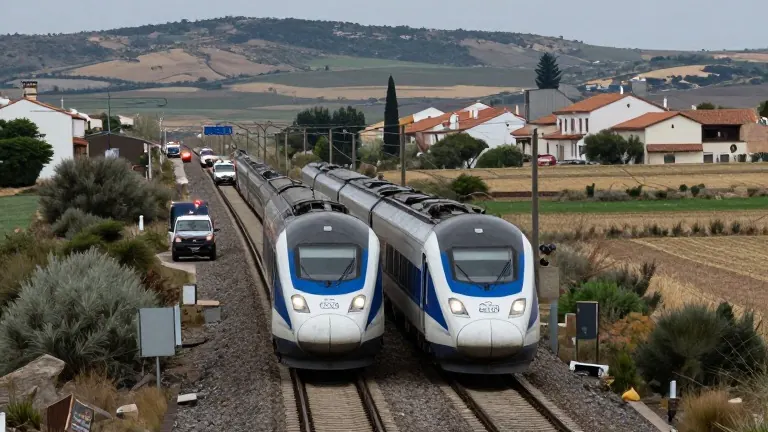
Residents of Cook County who follow international news or travel to Europe are watching a second major rail disaster in Spain this year. The incident occurred on Wednesday morning near the town of Urda in central Spain. A high-speed train traveling behind another struck the stopped train from the rear. The impact killed 69 people and left 50 others in hospitals.
The collision happened at 8:53 a.m. On the Madrid to Sevilla line. This is the same route involved in January's first fatal crash of the year, which killed 46 people. In that earlier incident, a train derailed and hit the side of an oncoming train in southern Spain. Spain's high-speed network, the second largest in the world after China, had no fatal accidents for over three decades until this year.
Regional leader Emiliano García-Page announced the final death toll of 69 after a body was found during the night. He stated that 50 people remained hospitalized. García-Page described the event as a catastrophe that put the entire country in a state of shock. He noted that identification work is complex because body parts are scattered and require matching.
Search teams with dogs continued looking for victims on Thursday morning. Cranes moved the damaged cars while police and soldiers inspected the debris on a gravel slope. At least three cars were thrown from the tracks by the force of the impact. The Spanish government declared three days of mourning starting Thursday. A minute of silence was held at midday outside the Parliament and at Madrid's main train station, where workers and union leaders gathered.
Prime Minister Pedro Sánchez visited the accident site on Thursday for a second time. He called the crash a tragedy and promised the state would support the victims and their families. Sánchez said the country needs to reinforce railway safety to rebuild trust. He pointed out that the system carried 45 million passengers last year, including millions of tourists. He stated it is not acceptable for Spain to suffer two high-speed train accidents in the same year.
Both crashes involved trains operated by the state company RENFE and the private company IRYO. Spain liberalized its high-speed service in 2021, and IRYO began operating in 2022. The collision is now part of the political backdrop for national elections scheduled for November 29. Sánchez had planned to use voter frustration over housing costs to his advantage. Now, he faces criticism from right-wing parties over migration policies and corruption accusations against his party and his wife, which both deny.
Alberto Núñez Feijóo, leader of the Popular Party and Sánchez's main rival, demanded a full investigation into the accident. Alejandro Quiroga, a political science professor at the Complutense University of Madrid, said it is too early to know if the crash will change voter opinion. He said it is not good news for Sánchez's party, but political use of tragedy is generally not well received in Spain.
Officials determined that human error caused the crash. A central command center issued what was described as an inexplicable order to a RENFE train. A safety system failed due to a computer error at 8:30 a.m., stopping all trains on that section. The IRYO train was stopped, and the RENFE train was 15.5 miles behind. Minutes later, command ordered the RENFE train to resume moving without speed restrictions. It hit the stationary IRYO train 23 minutes later.
Spanish media broadcast audio clips of the controller ordering the driver to move. Officials said the train should not have been ordered to move because a stop signal was still active. If it had moved, it should have been at reduced speed. A judge declared the accident scene an investigation zone. Thousands of travelers sought alternative transport as the Madrid-Sevilla line remained closed.
Railway workers held a strike on Thursday, a protest planned before the crash. They demanded safety improvements promised after the January incident. Union leaders questioned the minister for blaming a single controller and criticized the leak of control room conversations. Pepa Páez of the CCOO union said the focus should be on missing systems that prevent human error from causing disasters.
More World · Chicago news · Report a business · Got a Story?