Cook County voters face open Senate seat, Pritzker race in 2026 midterms
Polls in Illinois open at 6 a.m. Today as Cook County residents decide state leadership and congressional control in a high-stakes midterm.
By Andrew Hayes ·
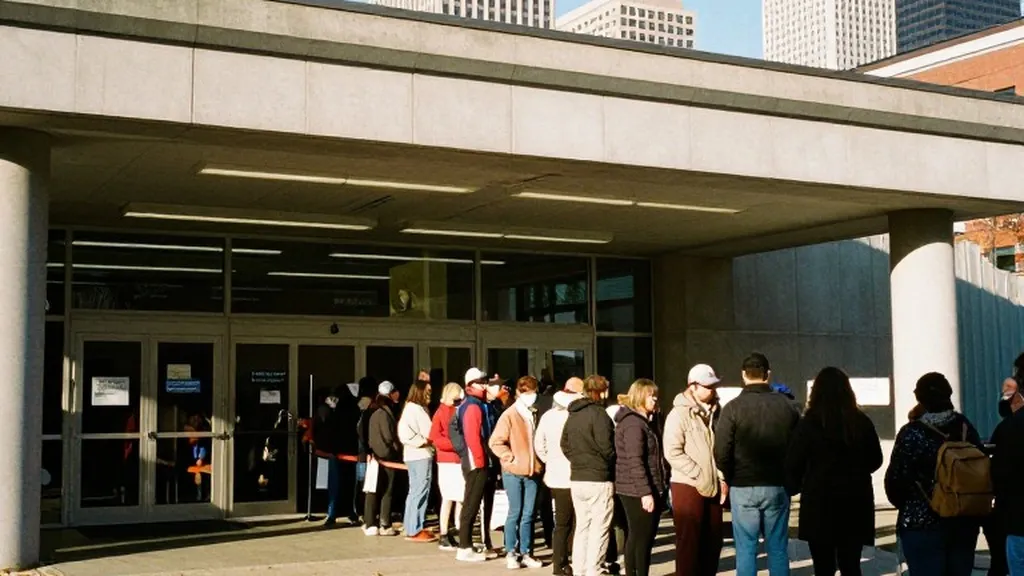
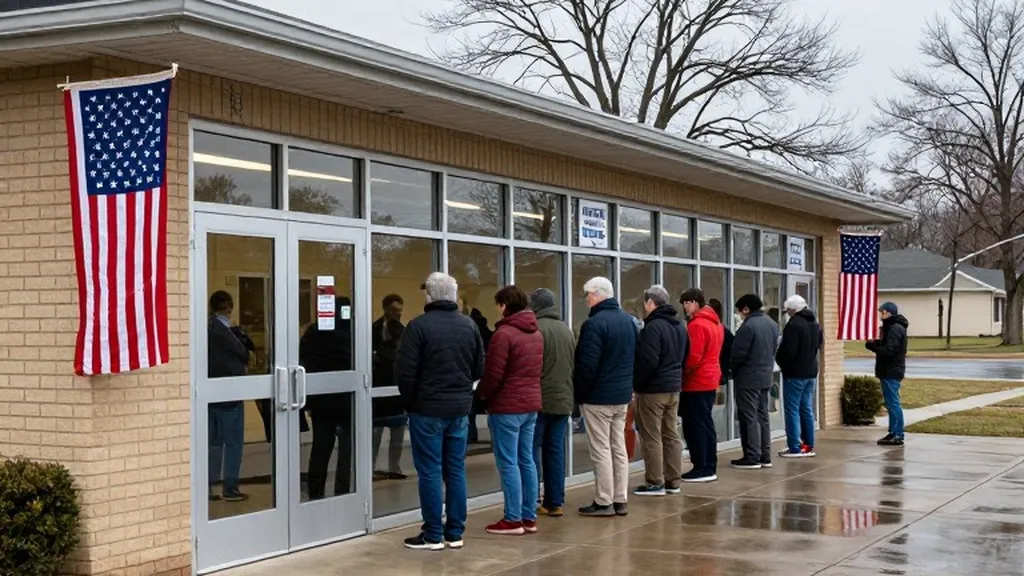
Voters in Cook County will head to the polls Tuesday, November 3, 2026, to participate in a pivotal midterm election that determines which party controls the United States Congress for the final two years of President Donald Trump's second term. The polls in Illinois will open at 6 a.m. And close at 7 p.m. Local time. Residents in Chicago, Cicero, Evanston, Arlington Heights, Skokie, and Des Plaines can find their specific polling locations at vote.gov or through their state election office. More than 57 million people had already cast ballots as of Monday, surpassing early voting totals from the previous cycle in many closely watched states.
The ballot in Illinois includes a competitive race for the United States Senate, which is currently an open seat with no incumbent running. Both Democratic and Republican candidates are on the ballot for this federal position. Additionally, Illinois voters will choose a governor, with incumbent Democratic Governor JB Pritzker seeking re-election against candidates from the Republican, Green, and Independent parties. Every United States House seat in the state is also on the ballot, along with state and local offices that vary by county. This election is a referendum on the president's second term, noting that voters are struggling with high prices and are angry over an unpopular war with Iran.
In the national context, all 435 seats in the United States House of Representatives are up for grabs. Republicans currently hold 218 seats, while Democrats hold 214, with one independent seat and several vacancies. For Democrats to gain a majority, they need a net gain of three districts, whereas Republicans can afford to lose no more than two. Ballotpedia identifies 46 battleground districts, including 25 held by Democrats and 21 held by Republicans. Twenty-one Democratic-held districts voted for Trump in 2024, while nine Republican-held districts voted for Kamala Harris. This shift in voting patterns is central to the current political narrative, as both parties fight for control of the legislative branch.
The United States Senate race involves 35 of the 100 total seats, including 33 regular elections and two special elections for the remainder of the terms held by Marco Rubio and JD Vance. Republicans hold 53 seats, and Democrats hold 45, plus two independents who caucus with Democrats. Democrats need a net gain of four seats to achieve a majority, while Republicans can lose only two. Eleven senators are not running for re-election, including four Democrats and seven Republicans. The winners of these races will begin their six-year terms on January 3, 2027. Key battlegrounds include Georgia, where Jon Ossoff faces Mike Collins, and Michigan, where Abdul El-Sayed is competing against Mike Rogers.
Thirty-six governorships are also on the ballot nationwide. Republicans currently hold 26 governor's offices, while Democrats hold 24. In the specific races on the ballot, each party holds 18 of the contested offices. Nineteen of these races do not feature an incumbent, as 15 governors are term-limited and others have chosen not to run. Democrats would need a net gain of two governorships to hold a nationwide majority, a position Republicans have maintained since 2010. In Illinois, the race between Governor Pritzker and his Republican opponent is a significant part of this broader state-level contest. The Associated Press notes that Democrats are cautiously optimistic about their chances in these races.
The mood among voters is characterized by frustration with the cost of living. 35 percent of U.S. Adults approve of Trump's job performance, while only 25 percent approve of his handling of the economy. About seven in 10 respondents say the country is heading in the wrong direction, with most blaming the president for high prices. James Moore, a 57-year-old librarian in Raleigh, North Carolina, said that he is paying more taxes, more for healthcare, and more for everything. This sentiment is reflected in Cook County, where local issues such as housing costs and infrastructure remain prominent in campaign discussions.
Election administration has faced some legal challenges this week. A federal judge temporarily barred the Trump administration from carrying out a plan intended to prevent noncitizen voting, a move that critics say risks disenfranchising eligible voters. Additionally, a judge ordered the administration to stop demanding that California election officials segregate ballots cast by people on its lists of suspected noncitizens. The U.S. Postal Service has added hours, staff, and special lines to ensure that mail ballots are counted on time. These administrative efforts are crucial for ensuring that the will of the people in Cook County and across the nation is accurately recorded.
Cook County voters should be aware that anyone in line when polls close is entitled to vote. Identification rules vary by state, so voters should check Illinois' specific requirements before going to the polls. The county's diverse communities, from the urban centers of Chicago to the suburban areas of Arlington Heights and Skokie, represent a wide range of political viewpoints. Republican committees have outraised and outspent Democratic committees at the national level, helped by Trump-affiliated groups and Elon Musk. However, at the candidate level, Democrats have outraised their opponents, indicating a fierce competition for resources and attention.
The stakes of this election extend beyond just congressional control. If Democrats win even one chamber, investigations and possible impeachment proceedings become likely. House Democratic Leader Hakeem Jeffries would be the first Black speaker and has outlined a 100-day agenda focused on the cost of living and oversight. A strong Democratic night would also boost potential 2028 candidates such as Gavin Newsom, JB Pritzker, and Pete Buttigieg. Republicans, on the other hand, are trying to break the historical midterm pattern where a president's party almost always loses seats. They have used redistricting to their advantage, though new districts in states like Florida may not vote as originally drawn.