Cook County voters weigh fate of 10 key Senate races in 2026 midterms
As polls open in Chicago and suburbs, the national battle for Senate control hinges on ten competitive states where local economic concerns intersect with federal power struggles.
By Matthew Brooks ·
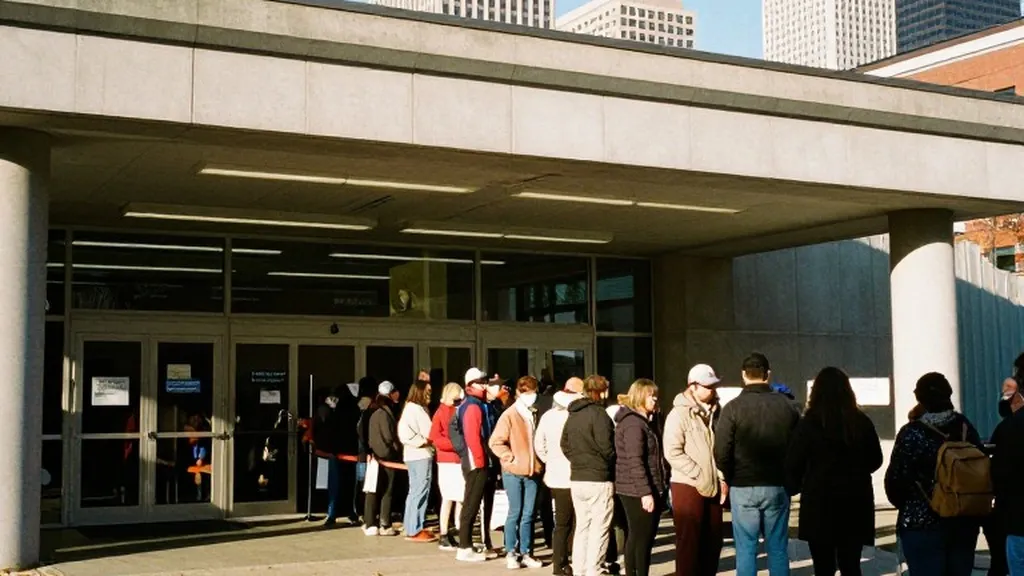
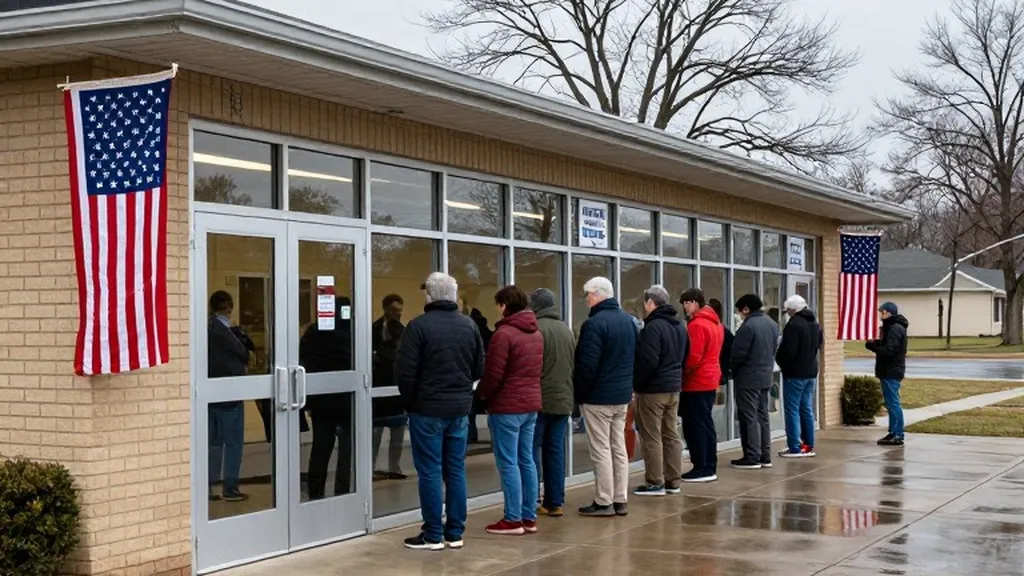
Voters in Cook County, Illinois, began casting their ballots at 6 a.m. Local time on Tuesday, November 3, 2026, with polls remaining open until 7 p.m. The day marks the midterm election halfway through President Donald Trump's second term, a contest that determines which party controls Congress for his final two years. In the county, residents of Chicago, Cicero, Evanston, Arlington Heights, Skokie, and Des Plaines are choosing between Democratic and Republican candidates for an open U.S. Senate seat, as well as incumbent Governor JB Pritzker. Every U.S. House seat in the state is also on the ballot, alongside various state and local offices that vary by specific municipality.
The national stakes are high, with 35 of the 100 Senate seats up for grabs. Republicans currently hold 53 seats, while Democrats hold 45, plus two independents who caucus with the minority party. Democrats need a net gain of four seats to secure a majority, whereas Republicans can afford to lose only two seats. The election is a referendum on the president's second term, noting that many voters are struggling with high prices and an unpopular war with Iran. 35 percent of U.S. Adults approve of the president's job performance, while about seven in 10 say the country is heading in the wrong direction.
Ten specific Senate matchups have drawn national attention due to their competitiveness and the margin by which the state voted in the 2024 presidential election. In North Carolina, an open seat is contested by Democratic former Governor Roy Cooper and former Republican National Committee chair Michael Whatley. The Associated Press notes that incumbent Thom Tillis retired after clashing with the president. In Georgia, incumbent Democratic Senator Jon Ossoff faces Republican Representative Mike Collins in a state that voted for the president by a margin of 2.2 percent in 2024.
In Ohio, the race features Democratic former Senator Sherrod Brown against Republican Senator Jon Husted. This is a special election for the remainder of the term originally won by Vice President JD Vance. In Michigan, Republican former Representative Mike Rogers competes against Democrat Abdul El-Sayed for the open seat left by retiring Senator Gary Peters. On Sunday, El-Sayed's former primary opponent, Haley Stevens, endorsed Rogers. In Texas, Republican Attorney General Ken Paxton, whom the president backed over Senator John Cornyn in the primary, faces Democrat James Talarico.
The competition is equally intense in the Northeast. In Maine, incumbent Republican Senator Susan Collins battles Democratic former state Senate President Troy Jackson. The Associated Press notes that economic strain and tariffs have made the state competitive, with the 2024 presidential margin favoring the former vice president by 6.9 percent. In New Hampshire, Democratic Representative Chris Pappas faces former Republican Senator John E. Sununu for the seat of retiring Democrat Jeanne Shaheen. In Minnesota, Democratic Lieutenant Governor Peggy Flanagan and Republican Michele Tafoya, a former sports broadcaster, are among four candidates running for the seat of retiring Senator Tina Smith.
The Plains and Mountain West present different challenges. In Kansas, a reliably Republican state has become central to the fight for Senate control, with incumbent Roger Marshall facing opposition in a state that voted for the president by 16.2 percent in 2024. In Alaska, the administration filed a lawsuit related to the certification of the Senate result. The state's 2024 presidential margin favored the incumbent president by 13.1 percent. These races are considered critical because one or two seats could tip either chamber.
Locally in Cook County, the atmosphere reflects the broader national mood. Voters are casting ballots for the governor's office, where incumbent JB Pritzker is running alongside candidates from the Green and Independent parties. The state's congressional map is part of a broader national trend where six states are using new maps after mid-decade redistricting, though Illinois is not among those six states listed by Ballotpedia as using new maps in this cycle. The day's proceedings are also shaped by federal legal moves, including a judge's order on Monday temporarily barring the administration from a plan to prevent noncitizen voting, a move critics say risks disenfranchising eligible voters.
The financial scale of this election is unprecedented. The 2026 elections will likely be the most expensive in history, with Republican committees outraising and outspending Democratic committees at the committee level, helped by Trump-affiliated groups and Elon Musk. However, at the candidate level, Democrats outraised their opponents. AP analysis of AdImpact data shows that 88.1 percent of Republican general election TV ad spending went to states and districts the president won in 2024. This heavy spending is intended to defend the party's position in the Senate, where the margin for error is extremely slim.
As polls close at 7 p.m. In Illinois, the focus shifts to the mechanics of the count. The U.S. Postal Service added hours and staff to ensure mail ballots are counted on time. In the county, local election officials are preparing to tally results from a day where more than 57 million people had already voted as of Monday, surpassing the early vote of four years ago in many closely watched states. The Associated Press notes that if Democrats win even one chamber, investigations and possible impeachment proceedings become likely, with House Democratic Leader Hakeem Jeffries outlined as a potential first Black speaker with a 100-day agenda focused on the cost of living.